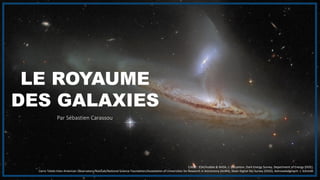
LE ROYAUME
DES GALAXIES
Par Sébastien Carassou
Crédit : ESA/Hubble & NASA, J. Dalcanton, Dark Energy Survey, Department of Energy (DOE),
Cerro Tololo Inter-American Observatory/NoirLab/National Science Foundation/Association of Universities for Research in Astronomy (AURA), Sloan Digital Sky Survey (SDSS); Acknowledgment: J. Schmidt
LE ROYAUME
DES GALAXIES
Par Sébastien Carassou
Crédit : Y. Beletsky (LCO)/ESO
I. LA VOIE LACTÉE
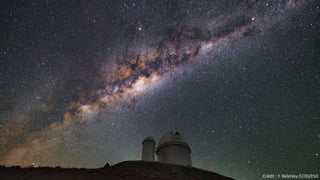
Crédit : Y. Beletsky (LCO)/ESO
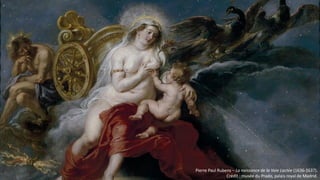
Pierre Paul Rubens – La naissance de la Voie Lactée (1636-1637).
Crédit : musée du Prado, palais royal de Madrid.
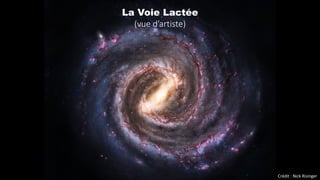
La Voie Lactée
(vue d’artiste)
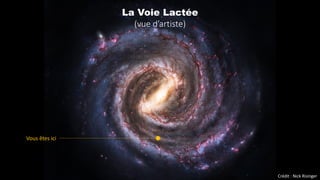
Crédit : Nick Risinger
Vous êtes ici
La Voie Lactée
(vue d’artiste)
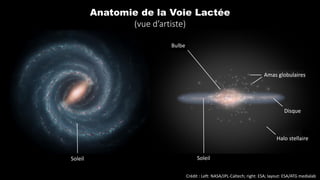
Crédit : Left: NASA/JPL-Caltech; right: ESA; layout: ESA/ATG medialab
Anatomie de la Voie Lactée
(vue d’artiste)
Soleil Soleil
Bulbe
Disque
Halo stellaire
Amas globulaires
Crédit : Stefan Payne-Wardenaar; Inset: NASA/JPL-Caltech; Layout: ESA
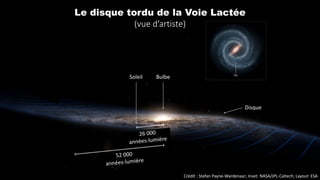
Le disque tordu de la Voie Lactée
(vue d’artiste)
Soleil Bulbe
Disque
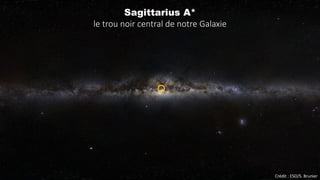
Crédit : ESO/S. Brunier
Sagittarius A*
le trou noir central de notre Galaxie
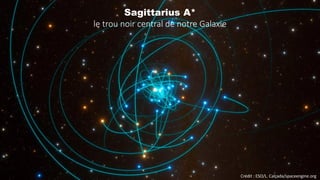
Crédit : ESO/L. Calçada/spaceengine.org
Sagittarius A*
le trou noir central de notre Galaxie
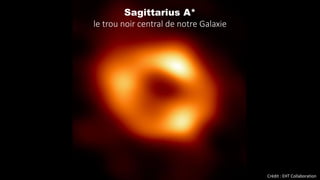
Crédit : EHT Collaboration
Sagittarius A*
le trou noir central de notre Galaxie
Crédit : ESO/L. Calçada
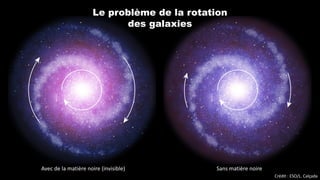
Le problème de la rotation
des galaxies
Avec de la matière noire (invisible) Sans matière noire
Crédit : ESO/L. Calçada
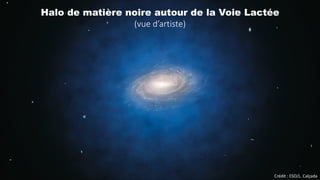
Halo de matière noire autour de la Voie Lactée
(vue d’artiste)
II. AU-DELÀ
DE LA VOIE LACTÉE
Crédit : Azcolvin429
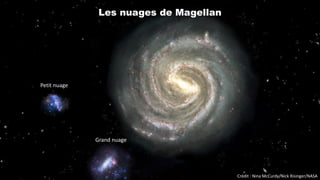
Crédit : Nina McCurdy/Nick Risinger/NASA
Les nuages de Magellan
Grand nuage
Petit nuage
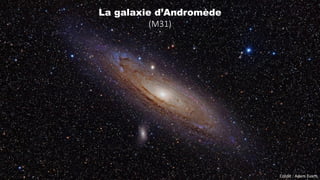
Crédit : Adam Evans
La galaxie d’Andromède
(M31)
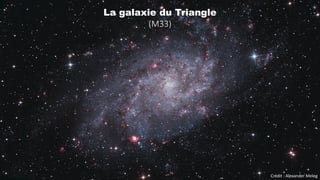
Crédit : Alexander Meleg
La galaxie du Triangle
(M33)
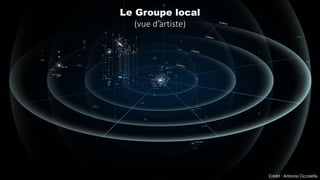
Crédit : Antonio Ciccolella
Le Groupe local
(vue d’artiste)
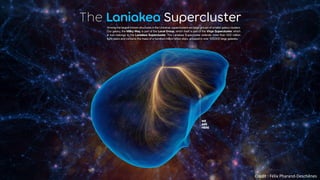
Crédit : Félix Pharand-Deschênes
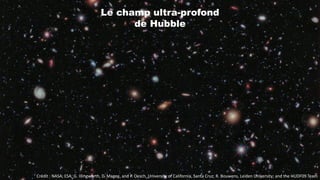
Crédit : NASA; ESA; G. Illingworth, D. Magee, and P. Oesch, University of California, Santa Cruz; R. Bouwens, Leiden University; and the HUDF09 Team
Le champ ultra-profond
de Hubble
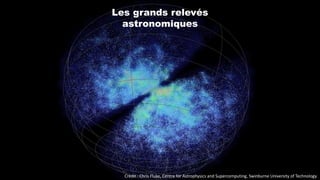
Crédit : Chris Fluke, Centre for Astrophysics and Supercomputing, Swinburne University of Technology.
Les grands relevés
astronomiques
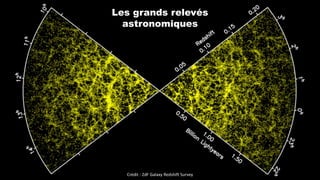
Crédit : 2dF Galaxy Redshift Survey
Les grands relevés
astronomiques
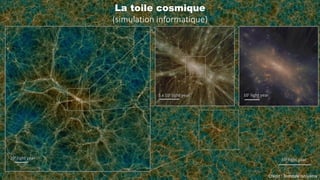
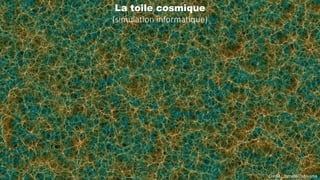
La toile cosmique
(simulation informatique)
Crédit : Tomoaki Ishiyama
La toile cosmique
(simulation informatique)
Crédit : Tomoaki Ishiyama
III. DES GALAXIES
DE TOUTES LES FORMES
Crédit : Judy Schmidt
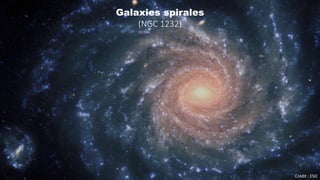
Crédit : ESO
Galaxies spirales
(NGC 1232)
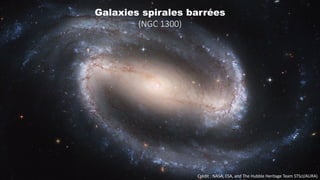
Crédit : NASA, ESA, and The Hubble Heritage Team STScI/AURA)
Galaxies spirales barrées
(NGC 1300)
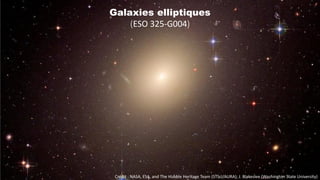
Crédit : NASA, ESA, and The Hubble Heritage Team (STScI/AURA); J. Blakeslee (Washington State University)
Galaxies elliptiques
(ESO 325-G004)
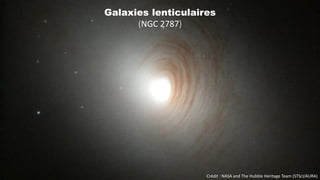
Crédit : NASA and The Hubble Heritage Team (STScI/AURA)
Galaxies lenticulaires
(NGC 2787)
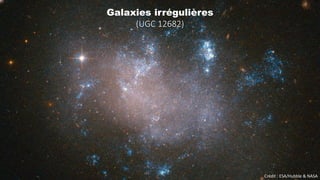
Crédit : ESA/Hubble & NASA
Galaxies irrégulières
(UGC 12682)
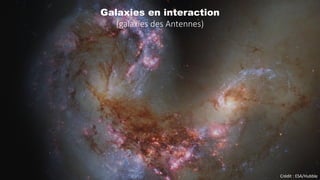
Crédit : ESA/Hubble
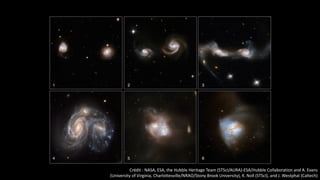
Galaxies en interaction
(galaxies des Antennes)
Crédit : NASA, ESA, the Hubble Heritage Team (STScI/AURA)-ESA/Hubble Collaboration and A. Evans
(University of Virginia, Charlottesville/NRAO/Stony Brook University), K. Noll (STScI), and J. Westphal (Caltech)
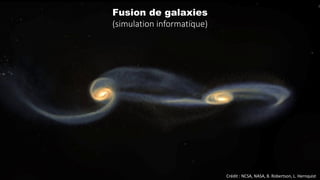
Crédit : NCSA, NASA, B. Robertson, L. Hernquist
Fusion de galaxies
(simulation informatique)
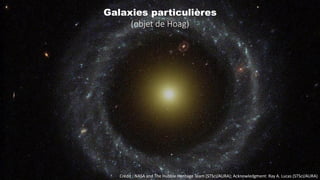
Crédit : NASA and The Hubble Heritage Team (STScI/AURA); Acknowledgment: Ray A. Lucas (STScI/AURA)
Galaxies particulières
(objet de Hoag)
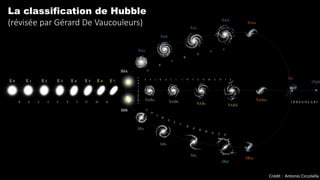
Crédit : Antonio Ciccolella
La classification de Hubble
(révisée par Gérard De Vaucouleurs)
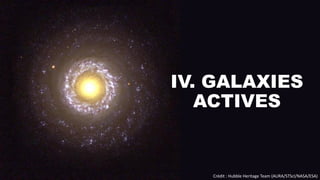
IV. GALAXIES
ACTIVES
Crédit : Hubble Heritage Team (AURA/STScI/NASA/ESA)
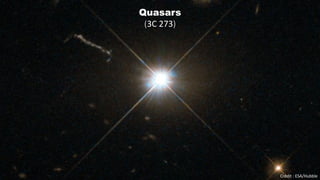
Quasars
(3C 273)
Crédit : ESA/Hubble
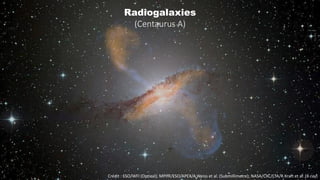
Crédit : ESO/WFI (Optical); MPIfR/ESO/APEX/A.Weiss et al. (Submillimetre); NASA/CXC/CfA/R.Kraft et al. (X-ray)
Radiogalaxies
(Centaurus A)
Crédit : Ilana Feain, Tim Cornwell & Ron Ekers (CSIRO/ATNF). ATCA northern middle lobe
pointing courtesy R. Morganti (ASTRON), Parkes data courtesy N. Junkes (MPIfR). Photo of
the ATCA and Moon: Shaun Amy, CSIRO.
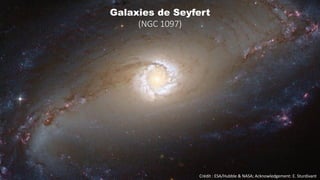
Crédit : ESA/Hubble & NASA; Acknowledgement: E. Sturdivant
Galaxies de Seyfert
(NGC 1097)
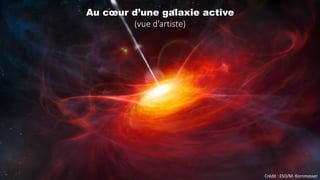
Crédit : ESO/M. Kornmesser
Au cœur d’une galaxie active
(vue d’artiste)
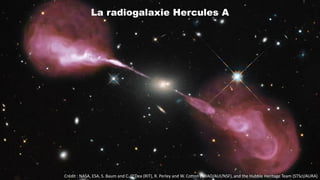
Crédit : NASA, ESA, S. Baum and C. O’Dea (RIT), R. Perley and W. Cotton (NRAO/AUI/NSF), and the Hubble Heritage Team (STScI/AURA)
La radiogalaxie Hercules A
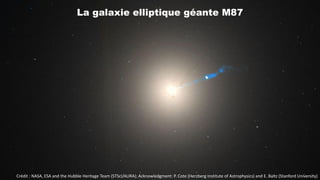
Crédit : NASA, ESA and the Hubble Heritage Team (STScI/AURA); Acknowledgment: P. Cote (Herzberg Institute of Astrophysics) and E. Baltz (Stanford University)
La galaxie elliptique géante M87
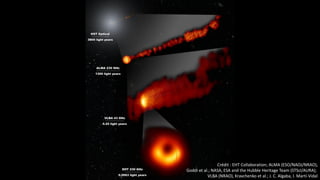
Crédit : EHT Collaboration; ALMA (ESO/NAOJ/NRAO),
Goddi et al.; NASA, ESA and the Hubble Heritage Team (STScI/AURA);
VLBA (NRAO), Kravchenko et al.; J. C. Algaba, I. Martí-Vidal
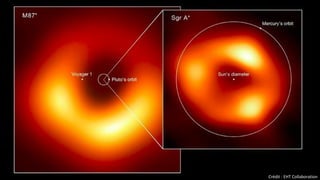
Crédit : XKCD / EHT Collaboration
Le trou noir supermassif M87*
Crédit : EHT Collaboration
IV. L’ENVIRONNEMENT
DES GALAXIES
Crédit : Illustris Collaboration
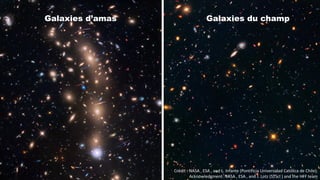
Galaxies d’amas
Crédit : NASA , ESA , and L. Infante (Pontificia Universidad Católica de Chile);
Acknowledgment: NASA , ESA , and J. Lotz (STScI ) and the HFF team
Galaxies du champ
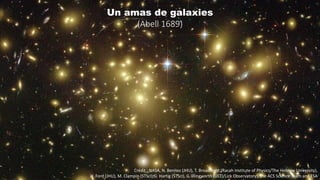
Crédit : NASA, N. Benitez (JHU), T. Broadhurst (Racah Institute of Physics/The Hebrew University),
H. Ford (JHU), M. Clampin (STScI),G. Hartig (STScI), G. Illingworth (UCO/Lick Observatory), the ACS Science Team and ESA
Un amas de galaxies
(Abell 1689)
Crédit : NASA, ESA, E. Jullo (JPL/LAM), P. Natarajan (Yale) and J-P. Kneib (LAM)
Distribution de la matière noire
dans l’amas Abell 1689
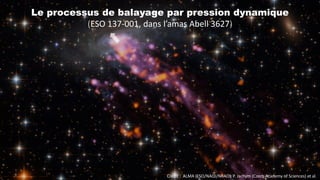
Crédit : ALMA (ESO/NAOJ/NRAO), P. Jachym (Czech Academy of Sciences) et al.
Le processus de balayage par pression dynamique
(ESO 137-001, dans l’amas Abell 3627)
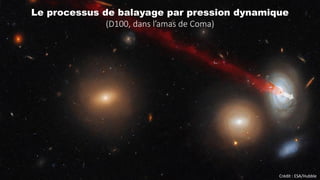
Crédit : ESA/Hubble
Le processus de balayage par pression dynamique
(D100, dans l’amas de Coma)
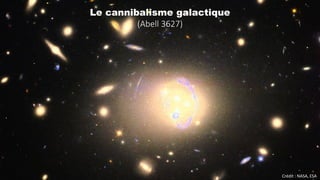
Crédit : NASA, ESA
Le cannibalisme galactique
(Abell 3627)
Crédit : NASA/ESA
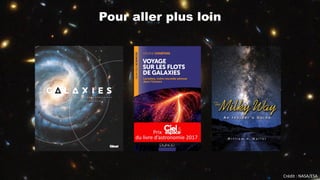
Pour aller plus loin

Le royaume des galaxies

  • 1.
    LE ROYAUME DES GALAXIES ParSébastien Carassou Crédit : ESA/Hubble & NASA, J. Dalcanton, Dark Energy Survey, Department of Energy (DOE), Cerro Tololo Inter-American Observatory/NoirLab/National Science Foundation/Association of Universities for Research in Astronomy (AURA), Sloan Digital Sky Survey (SDSS); Acknowledgment: J. Schmidt
  • 2.
    LE ROYAUME DES GALAXIES ParSébastien Carassou
  • 3.
    Crédit : Y.Beletsky (LCO)/ESO I. LA VOIE LACTÉE
  • 4.
    Crédit : Y.Beletsky (LCO)/ESO
  • 5.
    Pierre Paul Rubens– La naissance de la Voie Lactée (1636-1637). Crédit : musée du Prado, palais royal de Madrid.
  • 6.
    La Voie Lactée (vued’artiste) Crédit : Nick Risinger
  • 7.
    Crédit : NickRisinger Vous êtes ici La Voie Lactée (vue d’artiste)
  • 8.
    Crédit : Left:NASA/JPL-Caltech; right: ESA; layout: ESA/ATG medialab Anatomie de la Voie Lactée (vue d’artiste) Soleil Soleil Bulbe Disque Halo stellaire Amas globulaires
  • 9.
    Crédit : StefanPayne-Wardenaar; Inset: NASA/JPL-Caltech; Layout: ESA Le disque tordu de la Voie Lactée (vue d’artiste) Soleil Bulbe Disque
  • 10.
    Crédit : ESO/S.Brunier Sagittarius A* le trou noir central de notre Galaxie
  • 11.
    Crédit : ESO/L.Calçada/spaceengine.org Sagittarius A* le trou noir central de notre Galaxie
  • 12.
    Crédit : EHTCollaboration Sagittarius A* le trou noir central de notre Galaxie
  • 13.
    Crédit : ESO/L.Calçada Le problème de la rotation des galaxies Avec de la matière noire (invisible) Sans matière noire
  • 14.
    Crédit : ESO/L.Calçada Halo de matière noire autour de la Voie Lactée (vue d’artiste)
  • 15.
    II. AU-DELÀ DE LAVOIE LACTÉE Crédit : Azcolvin429
  • 16.
    Crédit : NinaMcCurdy/Nick Risinger/NASA Les nuages de Magellan Grand nuage Petit nuage
  • 17.
    Crédit : AdamEvans La galaxie d’Andromède (M31)
  • 18.
    Crédit : AlexanderMeleg La galaxie du Triangle (M33)
  • 19.
    Crédit : AntonioCiccolella Le Groupe local (vue d’artiste)
  • 20.
    Crédit : FélixPharand-Deschênes
  • 21.
    Crédit : NASA;ESA; G. Illingworth, D. Magee, and P. Oesch, University of California, Santa Cruz; R. Bouwens, Leiden University; and the HUDF09 Team Le champ ultra-profond de Hubble
  • 22.
    Crédit : ChrisFluke, Centre for Astrophysics and Supercomputing, Swinburne University of Technology. Les grands relevés astronomiques
  • 23.
    Crédit : 2dFGalaxy Redshift Survey Les grands relevés astronomiques
  • 24.
    La toile cosmique (simulationinformatique) Crédit : Tomoaki Ishiyama
  • 25.
    La toile cosmique (simulationinformatique) Crédit : Tomoaki Ishiyama
  • 26.
    III. DES GALAXIES DETOUTES LES FORMES Crédit : Judy Schmidt
  • 27.
    Crédit : ESO Galaxiesspirales (NGC 1232)
  • 28.
    Crédit : NASA,ESA, and The Hubble Heritage Team STScI/AURA) Galaxies spirales barrées (NGC 1300)
  • 29.
    Crédit : NASA,ESA, and The Hubble Heritage Team (STScI/AURA); J. Blakeslee (Washington State University) Galaxies elliptiques (ESO 325-G004)
  • 30.
    Crédit : NASAand The Hubble Heritage Team (STScI/AURA) Galaxies lenticulaires (NGC 2787)
  • 31.
    Crédit : ESA/Hubble& NASA Galaxies irrégulières (UGC 12682)
  • 32.
    Crédit : ESA/Hubble Galaxiesen interaction (galaxies des Antennes)
  • 33.
    Crédit : NASA,ESA, the Hubble Heritage Team (STScI/AURA)-ESA/Hubble Collaboration and A. Evans (University of Virginia, Charlottesville/NRAO/Stony Brook University), K. Noll (STScI), and J. Westphal (Caltech)
  • 34.
    Crédit : NCSA,NASA, B. Robertson, L. Hernquist Fusion de galaxies (simulation informatique)
  • 35.
    Crédit : NASAand The Hubble Heritage Team (STScI/AURA); Acknowledgment: Ray A. Lucas (STScI/AURA) Galaxies particulières (objet de Hoag)
  • 36.
    Crédit : AntonioCiccolella La classification de Hubble (révisée par Gérard De Vaucouleurs)
  • 37.
    IV. GALAXIES ACTIVES Crédit :Hubble Heritage Team (AURA/STScI/NASA/ESA)
  • 38.
  • 39.
    Crédit : ESO/WFI(Optical); MPIfR/ESO/APEX/A.Weiss et al. (Submillimetre); NASA/CXC/CfA/R.Kraft et al. (X-ray) Radiogalaxies (Centaurus A)
  • 40.
    Crédit : IlanaFeain, Tim Cornwell & Ron Ekers (CSIRO/ATNF). ATCA northern middle lobe pointing courtesy R. Morganti (ASTRON), Parkes data courtesy N. Junkes (MPIfR). Photo of the ATCA and Moon: Shaun Amy, CSIRO.
  • 41.
    Crédit : ESA/Hubble& NASA; Acknowledgement: E. Sturdivant Galaxies de Seyfert (NGC 1097)
  • 42.
    Crédit : ESO/M.Kornmesser Au cœur d’une galaxie active (vue d’artiste)
  • 43.
    Crédit : NASA,ESA, S. Baum and C. O’Dea (RIT), R. Perley and W. Cotton (NRAO/AUI/NSF), and the Hubble Heritage Team (STScI/AURA) La radiogalaxie Hercules A
  • 44.
    Crédit : NASA,ESA and the Hubble Heritage Team (STScI/AURA); Acknowledgment: P. Cote (Herzberg Institute of Astrophysics) and E. Baltz (Stanford University) La galaxie elliptique géante M87
  • 45.
    Crédit : EHTCollaboration; ALMA (ESO/NAOJ/NRAO), Goddi et al.; NASA, ESA and the Hubble Heritage Team (STScI/AURA); VLBA (NRAO), Kravchenko et al.; J. C. Algaba, I. Martí-Vidal
  • 46.
    Crédit : XKCD/ EHT Collaboration Le trou noir supermassif M87*
  • 47.
    Crédit : EHTCollaboration
  • 48.
  • 49.
    Galaxies d’amas Crédit :NASA , ESA , and L. Infante (Pontificia Universidad Católica de Chile); Acknowledgment: NASA , ESA , and J. Lotz (STScI ) and the HFF team Galaxies du champ
  • 50.
    Crédit : NASA,N. Benitez (JHU), T. Broadhurst (Racah Institute of Physics/The Hebrew University), H. Ford (JHU), M. Clampin (STScI),G. Hartig (STScI), G. Illingworth (UCO/Lick Observatory), the ACS Science Team and ESA Un amas de galaxies (Abell 1689)
  • 51.
    Crédit : NASA,ESA, E. Jullo (JPL/LAM), P. Natarajan (Yale) and J-P. Kneib (LAM) Distribution de la matière noire dans l’amas Abell 1689
  • 52.
    Crédit : ALMA(ESO/NAOJ/NRAO), P. Jachym (Czech Academy of Sciences) et al. Le processus de balayage par pression dynamique (ESO 137-001, dans l’amas Abell 3627)
  • 53.
    Crédit : ESA/Hubble Leprocessus de balayage par pression dynamique (D100, dans l’amas de Coma)
  • 54.
    Crédit : NASA,ESA Le cannibalisme galactique (Abell 3627)
  • 55.
    Crédit : NASA/ESA Pouraller plus loin