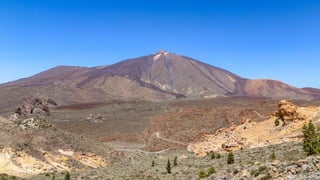
Crédit : AstroAnthony
VOIR PLUS LOIN
LA QUÊTE DE L’OBJET LE PLUS ÉLOIGNÉ
Si j’ai pu voir plus loin,
c’est parce que j’étais juché sur les épaules des géants
Isaac Newton
Crédit : dronepicr
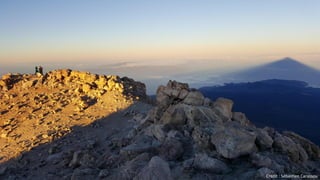
Crédit : Sébastien Carassou
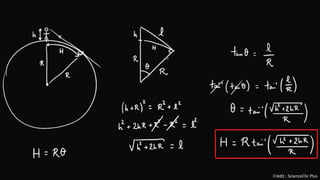
Crédit : ScienceClic Plus
Rayon de la Terre : 6 371 km
Altitude des yeux : 1.6 m
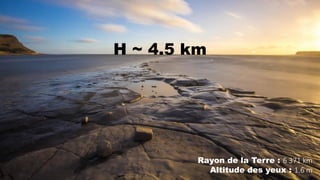
Rayon de la Terre : 6 371 km
Altitude des yeux : 1.6 m
H ~ 4.5 km
Rayon de la Terre : 6 371 km
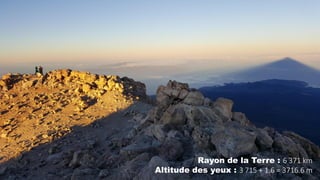
Altitude des yeux : 3 715 + 1.6 = 3716.6 m
Rayon de la Terre : 6 371 km
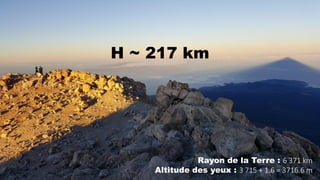
Altitude des yeux : 3 715 + 1.6 = 3716.6 m
H ~ 217 km
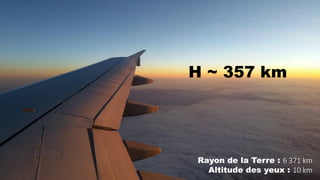
H ~ 357 km
Rayon de la Terre : 6 371 km
Altitude des yeux : 10 km
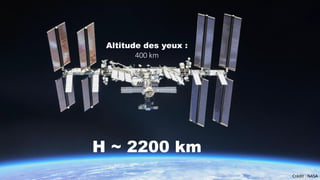
Altitude des yeux :
400 km
H ~ 2200 km
Crédit : NASA
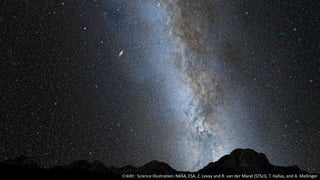
Crédit : Science Illustration: NASA, ESA, Z. Levay and R. van der Marel (STScI), T. Hallas, and A. Mellinger
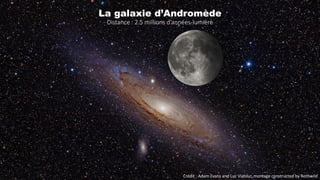
Crédit : Adam Evans and Luc Viatour, montage constructed by Rothwild
La galaxie d’Andromède
Distance : 2.5 millions d’années-lumière
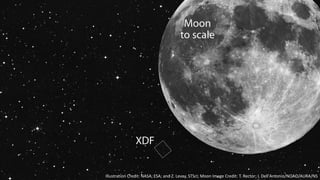
Illustration Credit: NASA; ESA; and Z. Levay, STScI; Moon Image Credit: T. Rector; I. Dell'Antonio/NOAO/AURA/NS
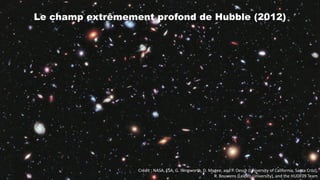
Crédit : NASA, ESA, G. Illingworth, D. Magee, and P. Oesch (University of California, Santa Cruz),
R. Bouwens (Leiden University), and the HUDF09 Team
Le champ extrêmement profond de Hubble (2012)
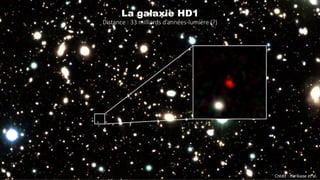
Crédit : Harikane et al.
La galaxie HD1
Distance : 33 milliards d’années-lumière (?)
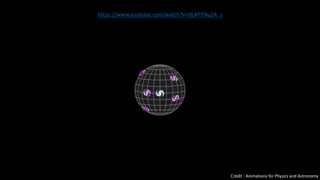
Crédit : Animations for Physics and Astronomy
https://www.youtube.com/watch?v=dLAPTNu2A_s
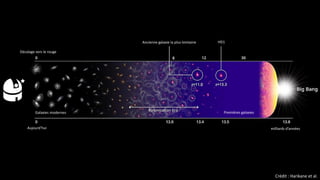
Crédit : Harikane et al.
Décalage vers le rouge
Aujourd’hui milliards d’années
HD1
Galaxies modernes
Ancienne galaxie la plus lointaine
Premières galaxies
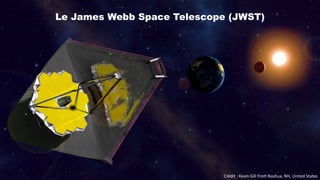
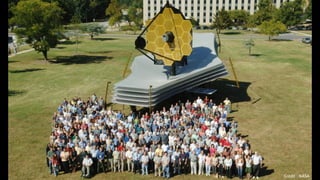
Crédit : Kevin Gill from Nashua, NH, United States
Le James Webb Space Telescope (JWST)
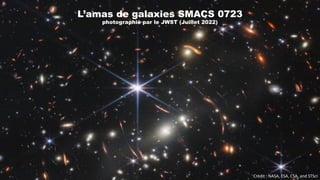
Crédit : NASA, ESA, CSA, and STScI
L’amas de galaxies SMACS 0723
photographié par le JWST (Juillet 2022)
Crédit : NASA

Voir plus loin.pdf

  • 1.
    Crédit : AstroAnthony VOIRPLUS LOIN LA QUÊTE DE L’OBJET LE PLUS ÉLOIGNÉ
  • 2.
    Si j’ai puvoir plus loin, c’est parce que j’étais juché sur les épaules des géants Isaac Newton
  • 3.
  • 4.
  • 5.
  • 6.
  • 7.
    Rayon de laTerre : 6 371 km Altitude des yeux : 1.6 m
  • 8.
    Rayon de laTerre : 6 371 km Altitude des yeux : 1.6 m H ~ 4.5 km
  • 9.
    Rayon de laTerre : 6 371 km Altitude des yeux : 3 715 + 1.6 = 3716.6 m
  • 10.
    Rayon de laTerre : 6 371 km Altitude des yeux : 3 715 + 1.6 = 3716.6 m H ~ 217 km
  • 11.
    H ~ 357km Rayon de la Terre : 6 371 km Altitude des yeux : 10 km
  • 12.
    Altitude des yeux: 400 km H ~ 2200 km Crédit : NASA
  • 13.
    Crédit : ScienceIllustration: NASA, ESA, Z. Levay and R. van der Marel (STScI), T. Hallas, and A. Mellinger
  • 14.
    Crédit : AdamEvans and Luc Viatour, montage constructed by Rothwild La galaxie d’Andromède Distance : 2.5 millions d’années-lumière
  • 15.
    Illustration Credit: NASA;ESA; and Z. Levay, STScI; Moon Image Credit: T. Rector; I. Dell'Antonio/NOAO/AURA/NS
  • 16.
    Crédit : NASA,ESA, G. Illingworth, D. Magee, and P. Oesch (University of California, Santa Cruz), R. Bouwens (Leiden University), and the HUDF09 Team Le champ extrêmement profond de Hubble (2012)
  • 17.
    Crédit : Harikaneet al. La galaxie HD1 Distance : 33 milliards d’années-lumière (?)
  • 18.
    Crédit : Animationsfor Physics and Astronomy https://www.youtube.com/watch?v=dLAPTNu2A_s
  • 19.
    Crédit : Harikaneet al. Décalage vers le rouge Aujourd’hui milliards d’années HD1 Galaxies modernes Ancienne galaxie la plus lointaine Premières galaxies
  • 20.
    Crédit : KevinGill from Nashua, NH, United States Le James Webb Space Telescope (JWST)
  • 21.
    Crédit : NASA,ESA, CSA, and STScI L’amas de galaxies SMACS 0723 photographié par le JWST (Juillet 2022)
  • 22.