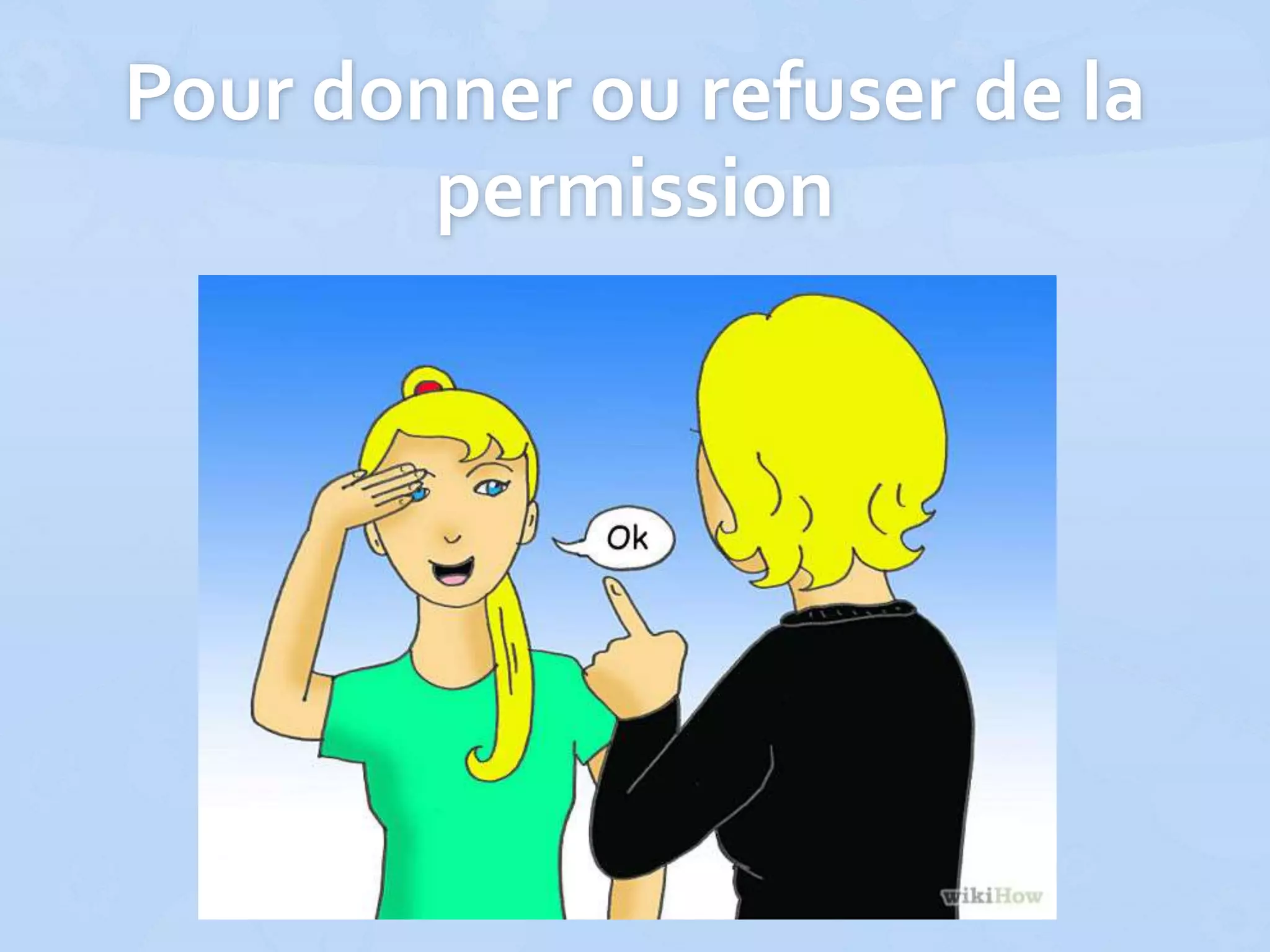

Pour donner ou refuser de la
permission
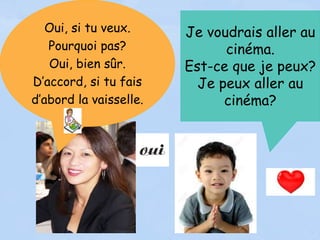
Je voudrais aller au
cinéma.
Est-ce que je peux?
Je peux aller au
cinéma?
Oui, si tu veux.
Pourquoi pas?
Oui, bien sûr.
D’accord, si tu fais
d’abord la vaisselle.
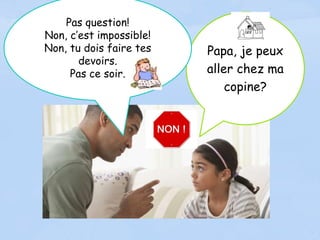
Papa, je peux
aller chez ma
copine?
Pas question!
Non, c’est impossible!
Non, tu dois faire tes
devoirs.
Pas ce soir.
À noter dans ton cahier
• Je voudrais aller au cinéma. (I would like to go to the movies..)
• Est-ce que je peux? (Can I?)
• Je peux aller au cinéma? (I can go to the movies?)
• Oui, si tu veux. (Yes, if you want.)
• Pourquoi pas? (Why not?)
• Oui, bien sûr. (Of course!)
• D’accord, si tu fais d’abord la vaisselle. (Okay, if you do the dishes
first)
• Pas question! (Out of the question!)
• Non, c’est impossible! (No, it’s impossible!)
• Non, tu dois faire tes devoirs. (No, you must do your homework)
• Pas ce soir. (Not tonight.)
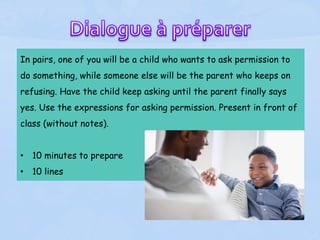
In pairs, one of you will be a child who wants to ask permission to
do something, while someone else will be the parent who keeps on
refusing. Have the child keep asking until the parent finally says
yes. Use the expressions for asking permission. Present in front of
class (without notes).
• 10 minutes to prepare
• 10 lines
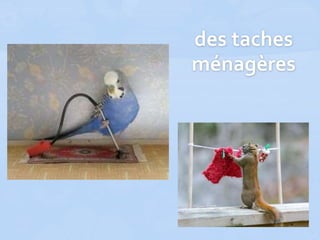
des taches
ménagères
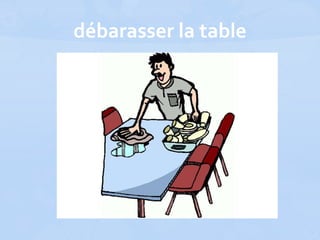
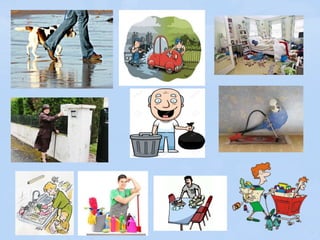
débarasser la table
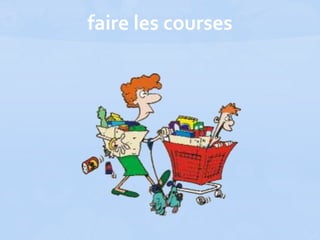
faire les courses
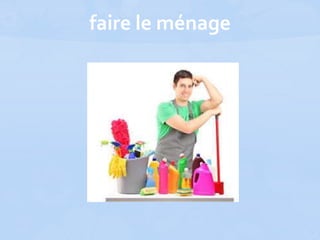
faire le ménage
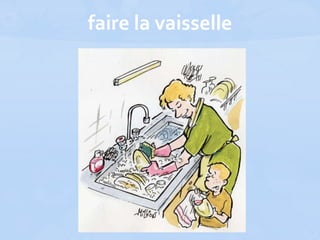
faire la vaisselle
garder ta petite soeur
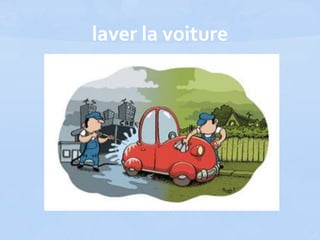
laver la voiture
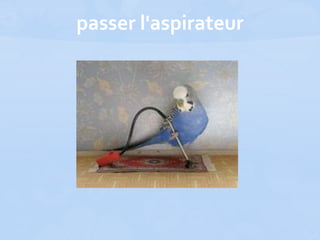
passer l'aspirateur
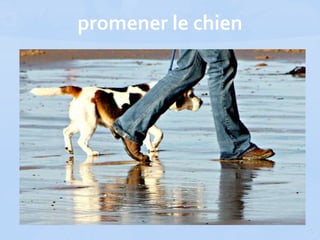
promener le chien
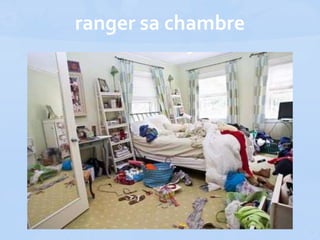
ranger sa chambre
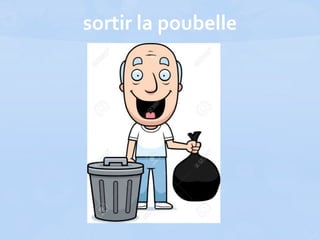
sortir la poubelle
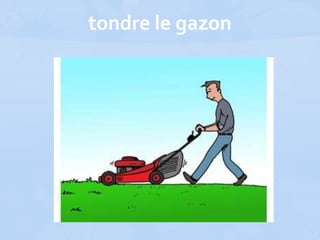
tondre le gazon
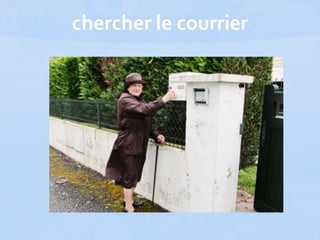
chercher le courrier
Dans votre cahier:
• débarasser la table (to clean the table)
• faire les courses (to go shopping)
• faire le ménage (to clean)
• faire la vaisselle (to do the dishes)
• garder ta petite soeur (to look after sister) )
• passer l'aspirateur (to vacuum)
• ranger sa chambre (to clean his room)
• promener le chien (to walk the dog)
• sortir la poubelle (to take out the trash)
• tondre le gazon (to mow the lawn)
• chercher le courrier (to get the mail)
• Laver la voiture (to wash the car)

Des tâches domestiques

  • 1.
    Pour donner ourefuser de la permission
  • 2.
    Je voudrais allerau cinéma. Est-ce que je peux? Je peux aller au cinéma? Oui, si tu veux. Pourquoi pas? Oui, bien sûr. D’accord, si tu fais d’abord la vaisselle.
  • 3.
    Papa, je peux allerchez ma copine? Pas question! Non, c’est impossible! Non, tu dois faire tes devoirs. Pas ce soir.
  • 4.
    À noter danston cahier • Je voudrais aller au cinéma. (I would like to go to the movies..) • Est-ce que je peux? (Can I?) • Je peux aller au cinéma? (I can go to the movies?) • Oui, si tu veux. (Yes, if you want.) • Pourquoi pas? (Why not?) • Oui, bien sûr. (Of course!) • D’accord, si tu fais d’abord la vaisselle. (Okay, if you do the dishes first) • Pas question! (Out of the question!) • Non, c’est impossible! (No, it’s impossible!) • Non, tu dois faire tes devoirs. (No, you must do your homework) • Pas ce soir. (Not tonight.)
  • 5.
    In pairs, oneof you will be a child who wants to ask permission to do something, while someone else will be the parent who keeps on refusing. Have the child keep asking until the parent finally says yes. Use the expressions for asking permission. Present in front of class (without notes). • 10 minutes to prepare • 10 lines
  • 6.
  • 7.
  • 8.
  • 9.
  • 10.
  • 11.
  • 12.
  • 13.
  • 14.
  • 15.
  • 16.
  • 17.
  • 18.
  • 20.
    Dans votre cahier: •débarasser la table (to clean the table) • faire les courses (to go shopping) • faire le ménage (to clean) • faire la vaisselle (to do the dishes) • garder ta petite soeur (to look after sister) ) • passer l'aspirateur (to vacuum) • ranger sa chambre (to clean his room) • promener le chien (to walk the dog) • sortir la poubelle (to take out the trash) • tondre le gazon (to mow the lawn) • chercher le courrier (to get the mail) • Laver la voiture (to wash the car)