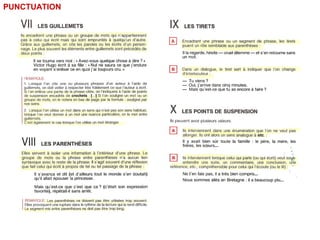
THE COMA
PUNCTUATION
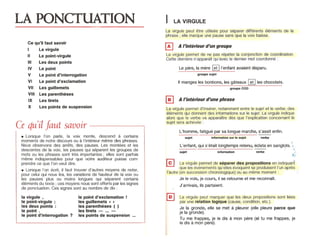
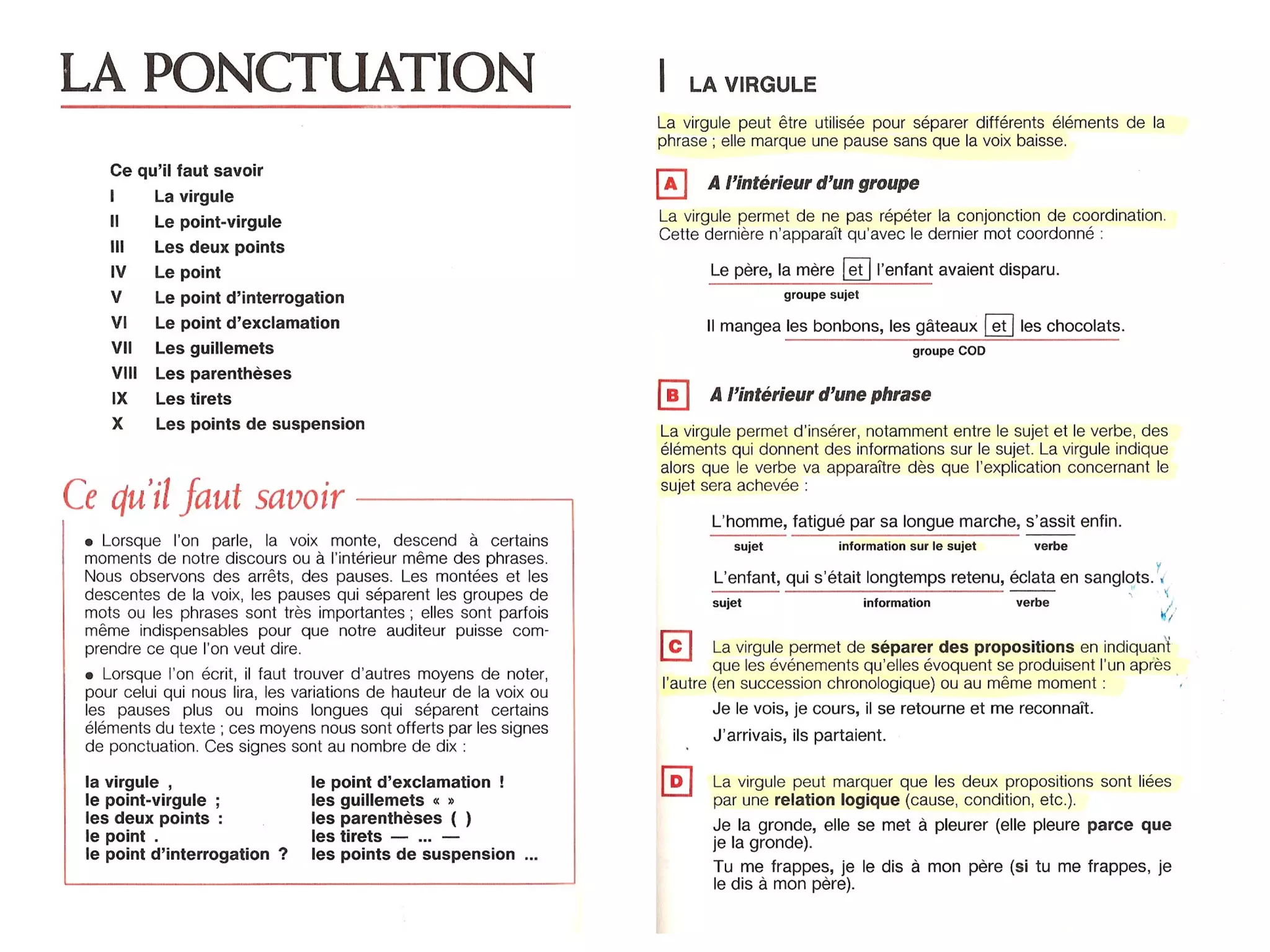
LA PONCTUATION
/ what you need to know
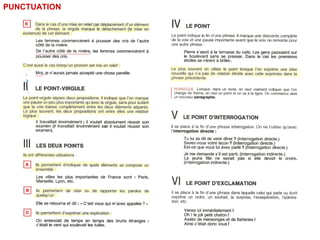
PUNCTUATION
THE PERIOD
THE INTERROGATION MARK
THE EXCLAMATION MARK
THE SEMICOLON
THE COLON
PUNCTUATION
THE ‘CURLY’ BRACKETS
THE PARENTESIS (OR BRACKETS)
THE ELLIPSIS
THE DASH
THE NOUN
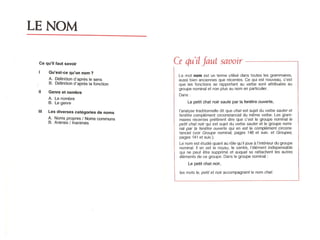
LE NOM
/ what you need to know
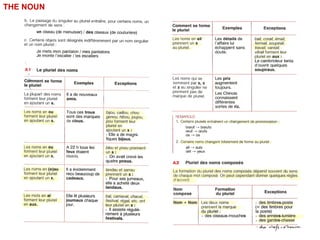
THE NOUN
WHAT IS A NOUN? GENDER AND NUMBER
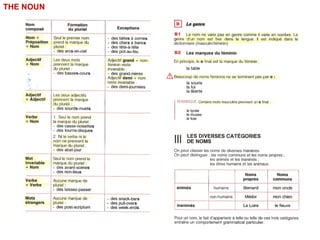
THE NOUN
- des chefs-d’oeuvre
THE NOUN
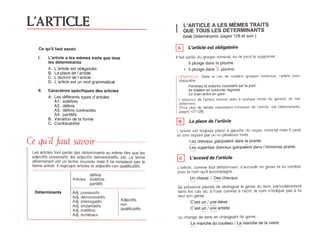
THE ARTICLE
L’ARTICLE
/ what you need to know
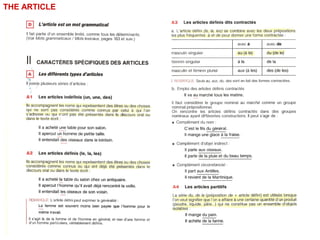
THE ARTICLE
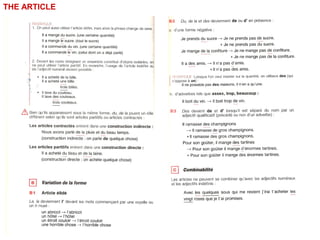
THE ARTICLE
/ what you need to know
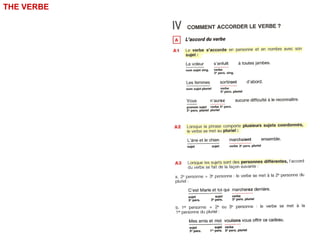
LE VERBE
THE VERBE
THE VERBE
WHAT IS A VERB? HOW DO WE CONJUGATE A VERB?
THE VERBE
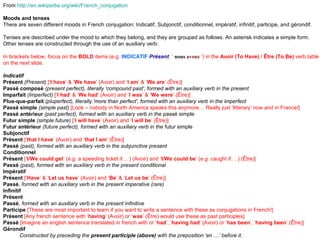
From http://en.wikipedia.org/wiki/French_conjugation
Moods and tenses
There are seven different moods in French conjugation: Indicatif, Subjonctif, conditionnel, impératif, infinitif, participe, and gérondif.
Tenses are described under the mood to which they belong, and they are grouped as follows. An asterisk indicates a simple form.
Other tenses are constructed through the use of an auxiliary verb:
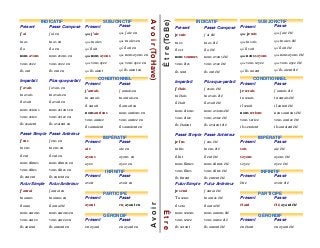
In brackets below, focus on the BOLD items (e.g. INDICATIF Présent ‘ nous avons ’) in the Avoir (To Have) / Être (To Be) verb table
on the next slide.
Indicatif
Présent (Present) [‘I have’ & ‘We have’ (Avoir) and ‘I am’ & ‘We are’ (Être)]
Passé composé (present perfect), literally 'compound past', formed with an auxiliary verb in the present
Imparfait (Imperfect) [‘I had’ & ‘We had’ (Avoir) and ‘I was’ & ‘We were’ (Être)]
Plus-que-parfait (pluperfect), literally 'more than perfect', formed with an auxiliary verb in the imperfect
Passé simple (simple past) [Look – nobody in North America speaks this anymore… Really just ‘litterary’ now and in France!]
Passé antérieur (past perfect), formed with an auxiliary verb in the passé simple
Futur simple (simple future) [‘I will have’ (Avoir) and ‘I will be’ (Être)]
Futur antérieur (future perfect), formed with an auxiliary verb in the futur simple
Subjonctif
Présent [‘that I have’ (Avoir) and ‘that I am’ (Être)]
Passé (past), formed with an auxiliary verb in the subjunctive present
Conditionnel
Présent [‘I/We could get’ (e.g. a speeding ticket if… ) (Avoir) and ‘I/We could be’ (e.g. caught if… ) (Être)]
Passé (past), formed with an auxiliary verb in the present conditional
Impératif
Présent [‘Have’ & ‘Let us have’ (Avoir) and ‘Be’ & ‘Let us be’ (Être)]
Passé, formed with an auxiliary verb in the present imperative (rare)
Infinitif
Présent [‘Have’ (Avoir) and ‘Am’ (Être)]
Passé, formed with an auxiliary verb in the present infinitive
Participe [These are most important to learn if you want to write a sentence with these as conjugations in French!]
Présent [Any french sentence with ‘having’ (Avoir) or ‘was’ (Être) would use these as past participles]
Passé [Imagine an english sentence translated in french with or ‘had’, ‘having had’ (Avoir) or ‘has been’, ‘having been’ (Être)]
Gérondif
Constructed by preceding the present participle (above) with the preposition 'en …‘ before it. [Present: ‘While Having’
(Avoir) and ‘While I am’ (Être); and Past: ‘While I had’ (Avoir) and ‘While I was’ (Être)]
Présent
je suis
tu es
il est
nous sommes
vous êtes
ils sont
Passé Composé
j’ai été
tu as été
il a été
nous avons été
vous avez été
ils ont été
Plus-que-parfait
j’avais été
tu avais été
il avait été
nous avions été
vous aviez été
ils avaient été
Passé Antérieur
j’eus été
tu eus été
il eut été
nous eûmes été
vous eûtes été
ils eurent été
Futur Antérieur
j’aurai été
tu auras été
il aura été
nous aurons été
vous aurez été
ils auront été
Imparfait
j’étais
tu étais
il était
nous étions
vous étiez
ils étaient
Passé Simple
je fus
tu fus
il fut
nous fûmes
vous fûtes
ils furent
Futur Simple
je serai
Tu seras
il sera
nous serons
vous serez
ils seront
Présent
j’ai
tu as
il a
nous avons
vous avez
ils ont
Passé Composé
j’ai eu
tu as eu
il a eu
nous avons eu
vous avez eu
ils ont eu
Plus-que-parfait
j’avais eu
tu avais eu
il avait eu
nous avions eu
vous aviez eu
ils avaient eu
Futur Antérieur
j’aurai eu
tu auras eu
il aura été
nous aurons eu
vous aurez eu
ils auront eu
Imparfait
j’avais
tu avais
il avait
nous avions
vous aviez
ils avaient
Passé Simple
j’eus
tu eus
il eut
nous eûmes
vous eûtes
ils eurent
Futur Simple
j’aurai
tu auras
il aura
nous aurons
vous aurez
ils auront
Passé Antérieur
j’eus eu
tu eus eu
il eut eu
nous eûmes eu
vous eûtes eu
ils eurent eu
Présent
que j’aie
que tu aies
qu’il ait
que nous ayons
que vous ayez
qu’ils aient
Passé
que j’aie eu
que tu aies eu
qu’il ait eu
que nous ayons eu
que vous ayez eu
qu’ils aient eu
Présent
j’aurais
tu aurais
il aurait
nous aurions
vous auriez
ils auraient
Passé
j’aurais eu
tu aurais eu
il aurait eu
nous aurions eu
vous auriez eu
ils auraient eu
CONDITIONNEL
SUBJONCTIFINDICATIF
CONDITIONNEL
SUBJONCTIFINDICATIF
IMPÉRATIF
Présent
aie
ayons
ayez
Passé
aie eu
ayons eu
ayez eu
INFINITIF
Présent
avoir
Passé
avoir eu
PARTICIPE
Présent
ayant
Passé
eu, ayant eu
GÉRONDIF
Présent
en ayant
Passé
en ayant eu
Présent
que je sois
que tu sois
qu’il soit
que nous soyons
que vous soyez
qu’ils soient
Passé
que j’aie été
que tu aies été
qu’il ait été
que nous ayons été
que vous ayez été
qu’ils aient été
Présent
je serais
tu serais
il serait
nous serions
vous seriez
ils seraient
Passé
j’aurais été
tu aurais été
il aurait été
nous aurions été
vous auriez été
ils auraient été
IMPÉRATIF
Présent
sois
soyons
soyez
Passé
aie été
ayons été
ayez été
INFINITIF
Présent
être
Passé
avoir été
PARTICIPE
Présent
étant
Passé
été, ayant été
GÉRONDIF
Présent
en étant
Passé
en ayant été
Avoir(ToHave)
Être(ToBe)
Avoir
Être

Francais (PDF)

  • 1.
  • 2.
    PUNCTUATION THE PERIOD THE INTERROGATIONMARK THE EXCLAMATION MARK THE SEMICOLON THE COLON
  • 3.
    PUNCTUATION THE ‘CURLY’ BRACKETS THEPARENTESIS (OR BRACKETS) THE ELLIPSIS THE DASH
  • 4.
    THE NOUN LE NOM /what you need to know
  • 5.
    THE NOUN WHAT ISA NOUN? GENDER AND NUMBER
  • 6.
    THE NOUN - deschefs-d’oeuvre
  • 7.
  • 8.
  • 9.
  • 10.
  • 11.
    / what youneed to know LE VERBE THE VERBE
  • 12.
    THE VERBE WHAT ISA VERB? HOW DO WE CONJUGATE A VERB?
  • 13.
  • 14.
    From http://en.wikipedia.org/wiki/French_conjugation Moods andtenses There are seven different moods in French conjugation: Indicatif, Subjonctif, conditionnel, impératif, infinitif, participe, and gérondif. Tenses are described under the mood to which they belong, and they are grouped as follows. An asterisk indicates a simple form. Other tenses are constructed through the use of an auxiliary verb: In brackets below, focus on the BOLD items (e.g. INDICATIF Présent ‘ nous avons ’) in the Avoir (To Have) / Être (To Be) verb table on the next slide. Indicatif Présent (Present) [‘I have’ & ‘We have’ (Avoir) and ‘I am’ & ‘We are’ (Être)] Passé composé (present perfect), literally 'compound past', formed with an auxiliary verb in the present Imparfait (Imperfect) [‘I had’ & ‘We had’ (Avoir) and ‘I was’ & ‘We were’ (Être)] Plus-que-parfait (pluperfect), literally 'more than perfect', formed with an auxiliary verb in the imperfect Passé simple (simple past) [Look – nobody in North America speaks this anymore… Really just ‘litterary’ now and in France!] Passé antérieur (past perfect), formed with an auxiliary verb in the passé simple Futur simple (simple future) [‘I will have’ (Avoir) and ‘I will be’ (Être)] Futur antérieur (future perfect), formed with an auxiliary verb in the futur simple Subjonctif Présent [‘that I have’ (Avoir) and ‘that I am’ (Être)] Passé (past), formed with an auxiliary verb in the subjunctive present Conditionnel Présent [‘I/We could get’ (e.g. a speeding ticket if… ) (Avoir) and ‘I/We could be’ (e.g. caught if… ) (Être)] Passé (past), formed with an auxiliary verb in the present conditional Impératif Présent [‘Have’ & ‘Let us have’ (Avoir) and ‘Be’ & ‘Let us be’ (Être)] Passé, formed with an auxiliary verb in the present imperative (rare) Infinitif Présent [‘Have’ (Avoir) and ‘Am’ (Être)] Passé, formed with an auxiliary verb in the present infinitive Participe [These are most important to learn if you want to write a sentence with these as conjugations in French!] Présent [Any french sentence with ‘having’ (Avoir) or ‘was’ (Être) would use these as past participles] Passé [Imagine an english sentence translated in french with or ‘had’, ‘having had’ (Avoir) or ‘has been’, ‘having been’ (Être)] Gérondif Constructed by preceding the present participle (above) with the preposition 'en …‘ before it. [Present: ‘While Having’ (Avoir) and ‘While I am’ (Être); and Past: ‘While I had’ (Avoir) and ‘While I was’ (Être)]
  • 15.
    Présent je suis tu es ilest nous sommes vous êtes ils sont Passé Composé j’ai été tu as été il a été nous avons été vous avez été ils ont été Plus-que-parfait j’avais été tu avais été il avait été nous avions été vous aviez été ils avaient été Passé Antérieur j’eus été tu eus été il eut été nous eûmes été vous eûtes été ils eurent été Futur Antérieur j’aurai été tu auras été il aura été nous aurons été vous aurez été ils auront été Imparfait j’étais tu étais il était nous étions vous étiez ils étaient Passé Simple je fus tu fus il fut nous fûmes vous fûtes ils furent Futur Simple je serai Tu seras il sera nous serons vous serez ils seront Présent j’ai tu as il a nous avons vous avez ils ont Passé Composé j’ai eu tu as eu il a eu nous avons eu vous avez eu ils ont eu Plus-que-parfait j’avais eu tu avais eu il avait eu nous avions eu vous aviez eu ils avaient eu Futur Antérieur j’aurai eu tu auras eu il aura été nous aurons eu vous aurez eu ils auront eu Imparfait j’avais tu avais il avait nous avions vous aviez ils avaient Passé Simple j’eus tu eus il eut nous eûmes vous eûtes ils eurent Futur Simple j’aurai tu auras il aura nous aurons vous aurez ils auront Passé Antérieur j’eus eu tu eus eu il eut eu nous eûmes eu vous eûtes eu ils eurent eu Présent que j’aie que tu aies qu’il ait que nous ayons que vous ayez qu’ils aient Passé que j’aie eu que tu aies eu qu’il ait eu que nous ayons eu que vous ayez eu qu’ils aient eu Présent j’aurais tu aurais il aurait nous aurions vous auriez ils auraient Passé j’aurais eu tu aurais eu il aurait eu nous aurions eu vous auriez eu ils auraient eu CONDITIONNEL SUBJONCTIFINDICATIF CONDITIONNEL SUBJONCTIFINDICATIF IMPÉRATIF Présent aie ayons ayez Passé aie eu ayons eu ayez eu INFINITIF Présent avoir Passé avoir eu PARTICIPE Présent ayant Passé eu, ayant eu GÉRONDIF Présent en ayant Passé en ayant eu Présent que je sois que tu sois qu’il soit que nous soyons que vous soyez qu’ils soient Passé que j’aie été que tu aies été qu’il ait été que nous ayons été que vous ayez été qu’ils aient été Présent je serais tu serais il serait nous serions vous seriez ils seraient Passé j’aurais été tu aurais été il aurait été nous aurions été vous auriez été ils auraient été IMPÉRATIF Présent sois soyons soyez Passé aie été ayons été ayez été INFINITIF Présent être Passé avoir été PARTICIPE Présent étant Passé été, ayant été GÉRONDIF Présent en étant Passé en ayant été Avoir(ToHave) Être(ToBe) Avoir Être