

La cartographie conceptuelle
Valéry Ridde
Institut d’été PHIRNET
Université de Montréal – 9 mai 2013
CARTOGRAPHIE CONCEPTUELLE
• Technique de consensus de groupe
• Développée par W. M. K. Trochim
• Participation active des parties prenantes
• Analyses statistiques multivariées à partir de
données qualitatives (MDS & HCA)
• Présentation des résultats sous forme graphique
• Quatre étapes
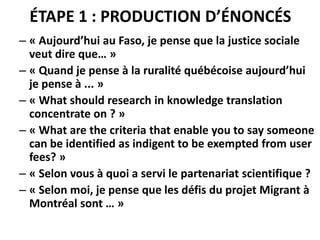
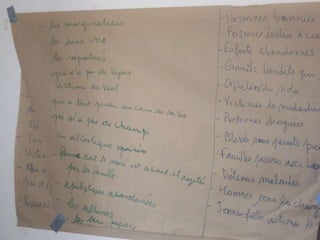
ÉTAPE 1 : PRODUCTION D’ÉNONCÉS
– « Aujourd’hui au Faso, je pense que la justice sociale
veut dire que… »
– « Quand je pense à la ruralité québécoise aujourd’hui
je pense à ... »
– « What should research in knowledge translation
concentrate on ? »
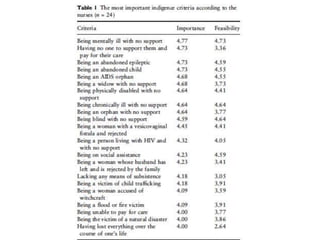
– « What are the criteria that enable you to say someone
can be identified as indigent to be exempted from user
fees? »
– « Selon vous à quoi a servi le partenariat scientifique ?
– « Selon moi, je pense que les défis du projet Migrant à
Montréal sont … »
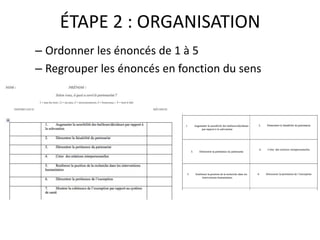
ÉTAPE 2 : ORGANISATION
– Ordonner les énoncés de 1 à 5
– Regrouper les énoncés en fonction du sens
ÉTAPE 3 : ANALYSE STATISTIQUE
• Statistiques descriptives
• Échelonnage multidimensionnel et analyse de grappe
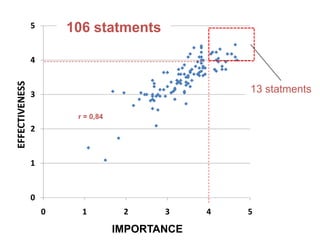
0
1
2
3
4
5
0 1 2 3 4 5
IMPORTANCE
EFFECTIVENESS
r = 0,84
106 statments
13 statments
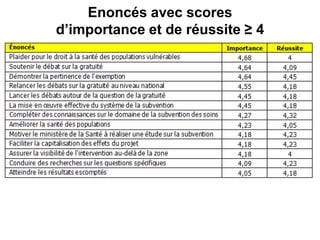
Enoncés avec scores
d’importance et de réussite ≥ 4
ÉTAPE 4 : INTERPRÉTATION
• Consensus des participants sur l’étiquetage des
grappes et déplacement des énoncés d’une grappe à
l’autre
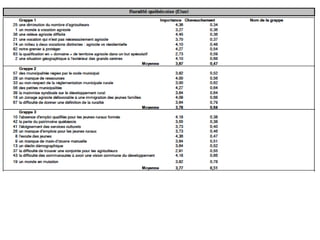
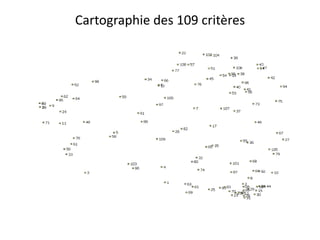
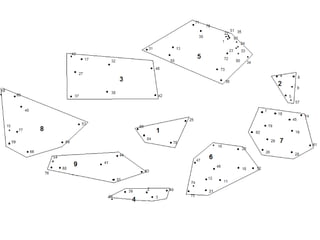
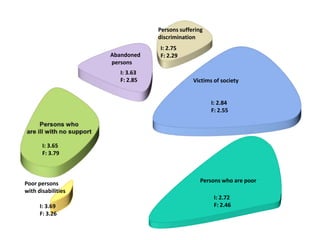
Cartographie des 109 critères
I: 3.65
F: 3.79
I: 2.72
F: 2.46
Abandoned
persons
I: 3.63
F: 2.85
Persons suffering
discrimination
I: 2.75
F: 2.29
Victims of society
I: 2.84
F: 2.55
Persons who are poorPoor persons
with disabilities
I: 3.69
F: 3.26
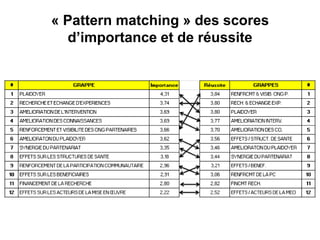
« Pattern matching » des scores
d’importance et de réussite
The « Concept mapping » methodology:
1-a review of users’ evaluative comments
2- internal Validity: A Case of Misconceived
Mapping?
Christian Dagenais, Ph.D.
Université de Montréal
Normand Péladeau, Ph.D.
Provalis Research
Valéry Ridde, Ph.D.
Université de Montréal
AEA annual meeting 2012
Minneapolis, October 26
http://fr.slideshare.net/valery_ridde/the-concept-mapping-methodology-a-review-of-users-
evaluative-comments-a-case-of-misconceived-mapping
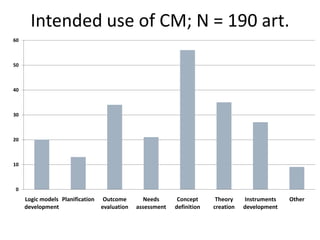
Intended use of CM; N = 190 art.
0
10
20
30
40
50
60
Logic models
development
Planification Outcome
evaluation
Needs
assessment
Concept
definition
Theory
creation
Instruments
development
Other
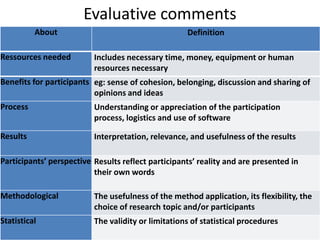
Evaluative comments
About Definition
Ressources needed Includes necessary time, money, equipment or human
resources necessary
Benefits for participants eg: sense of cohesion, belonging, discussion and sharing of
opinions and ideas
Process Understanding or appreciation of the participation
process, logistics and use of software
Results Interpretation, relevance, and usefulness of the results
Participants’ perspective Results reflect participants’ reality and are presented in
their own words
Methodological The usefulness of the method application, its flexibility, the
choice of research topic and/or participants
Statistical The validity or limitations of statistical procedures

La cartographie conceptuelle en image

  • 1.
    La cartographie conceptuelle ValéryRidde Institut d’été PHIRNET Université de Montréal – 9 mai 2013
  • 2.
    CARTOGRAPHIE CONCEPTUELLE • Techniquede consensus de groupe • Développée par W. M. K. Trochim • Participation active des parties prenantes • Analyses statistiques multivariées à partir de données qualitatives (MDS & HCA) • Présentation des résultats sous forme graphique • Quatre étapes
  • 3.
    ÉTAPE 1 :PRODUCTION D’ÉNONCÉS – « Aujourd’hui au Faso, je pense que la justice sociale veut dire que… » – « Quand je pense à la ruralité québécoise aujourd’hui je pense à ... » – « What should research in knowledge translation concentrate on ? » – « What are the criteria that enable you to say someone can be identified as indigent to be exempted from user fees? » – « Selon vous à quoi a servi le partenariat scientifique ? – « Selon moi, je pense que les défis du projet Migrant à Montréal sont … »
  • 5.
    ÉTAPE 2 :ORGANISATION – Ordonner les énoncés de 1 à 5 – Regrouper les énoncés en fonction du sens
  • 7.
    ÉTAPE 3 :ANALYSE STATISTIQUE • Statistiques descriptives • Échelonnage multidimensionnel et analyse de grappe
  • 9.
    0 1 2 3 4 5 0 1 23 4 5 IMPORTANCE EFFECTIVENESS r = 0,84 106 statments 13 statments
  • 10.
  • 11.
    ÉTAPE 4 :INTERPRÉTATION • Consensus des participants sur l’étiquetage des grappes et déplacement des énoncés d’une grappe à l’autre
  • 16.
  • 18.
    I: 3.65 F: 3.79 I:2.72 F: 2.46 Abandoned persons I: 3.63 F: 2.85 Persons suffering discrimination I: 2.75 F: 2.29 Victims of society I: 2.84 F: 2.55 Persons who are poorPoor persons with disabilities I: 3.69 F: 3.26
  • 19.
    « Pattern matching» des scores d’importance et de réussite
  • 20.
    The « Conceptmapping » methodology: 1-a review of users’ evaluative comments 2- internal Validity: A Case of Misconceived Mapping? Christian Dagenais, Ph.D. Université de Montréal Normand Péladeau, Ph.D. Provalis Research Valéry Ridde, Ph.D. Université de Montréal AEA annual meeting 2012 Minneapolis, October 26 http://fr.slideshare.net/valery_ridde/the-concept-mapping-methodology-a-review-of-users- evaluative-comments-a-case-of-misconceived-mapping
  • 21.
    Intended use ofCM; N = 190 art. 0 10 20 30 40 50 60 Logic models development Planification Outcome evaluation Needs assessment Concept definition Theory creation Instruments development Other
  • 22.
    Evaluative comments About Definition Ressourcesneeded Includes necessary time, money, equipment or human resources necessary Benefits for participants eg: sense of cohesion, belonging, discussion and sharing of opinions and ideas Process Understanding or appreciation of the participation process, logistics and use of software Results Interpretation, relevance, and usefulness of the results Participants’ perspective Results reflect participants’ reality and are presented in their own words Methodological The usefulness of the method application, its flexibility, the choice of research topic and/or participants Statistical The validity or limitations of statistical procedures