Les propositions introduites par “ si ”
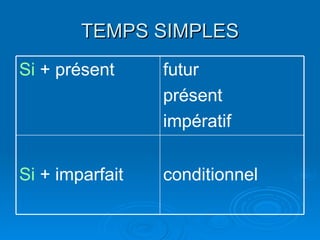
TEMPS SIMPLES conditionnel Si  + imparfait futur pr ésent imp ératif Si  + pr ésent
Si  je  vais   à Paris, je  verrai  le Louvre.  ( If I  go  to Paris, I  will see  the Louvre .) Si  j’ allais  à Paris, je  verrais  le Louvre.  (If I  went  to Paris, I  would see  the Louvre.)
Use of  si  + pr ésent The use of the verb tense following  si  + pr ésent  depends on the meaning you wish to convey. Si  je cours, tu me  regarderas . ( If I run, you  will watch  me .)  - indicates future result
Si  je cours, tu me  regardes toujours .  ( If I run, you  always watch  me .)  - indicates general result; note use of “toujours” Si  je cours,  regarde -moi.  ( If I run,  watch  me .) – a command
Position of  si Si  may be placed at the beginning or in the middle of the sentence. Si  elle joue, elle gagnera. OR Elle gagnera  si  elle joue.
TEMPS COMPOS ÉS Si  j’  étais allé  à Paris,  j’  aurais vu le Louvre.  ( If I  had gone  to Paris, I  would have seen  the Louvre .) conditionnel pass é Si  + plus-que-parfait
P.S. Si  + elle/ elles =  Si  elle/  Si  elles… … ..BUT Si  + il/ ils =  S ’il/  S ’ils …
Si  vous  étudiez , vous  comprendrez  les propositions avec “si”!

Les Propositions Introduites Par Si

  • 1.
  • 2.
    TEMPS SIMPLES conditionnelSi + imparfait futur pr ésent imp ératif Si + pr ésent
  • 3.
    Si je vais à Paris, je verrai le Louvre. ( If I go to Paris, I will see the Louvre .) Si j’ allais à Paris, je verrais le Louvre. (If I went to Paris, I would see the Louvre.)
  • 4.
    Use of si + pr ésent The use of the verb tense following si + pr ésent depends on the meaning you wish to convey. Si je cours, tu me regarderas . ( If I run, you will watch me .) - indicates future result
  • 5.
    Si jecours, tu me regardes toujours . ( If I run, you always watch me .) - indicates general result; note use of “toujours” Si je cours, regarde -moi. ( If I run, watch me .) – a command
  • 6.
    Position of si Si may be placed at the beginning or in the middle of the sentence. Si elle joue, elle gagnera. OR Elle gagnera si elle joue.
  • 7.
    TEMPS COMPOS ÉSSi j’ étais allé à Paris, j’ aurais vu le Louvre. ( If I had gone to Paris, I would have seen the Louvre .) conditionnel pass é Si + plus-que-parfait
  • 8.
    P.S. Si + elle/ elles = Si elle/ Si elles… … ..BUT Si + il/ ils = S ’il/ S ’ils …
  • 9.
    Si vous étudiez , vous comprendrez les propositions avec “si”!