les adjectifs possessifs
In English, we use this type of
word everyday when referring
to certain items that belong to
someone.
les adjectifs possessifs
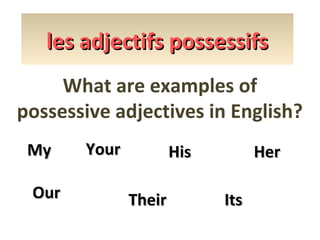
What are examples of
possessive adjectives in English?
My
Our

Your

His
Their

Her
Its
les adjectifs possessifs
In French, there are different
words that mean “my”, “your”,
“his”, (etc.) based on the gender
of the noun you are talking
about, and whether it is a
singular or plural noun.
les adjectifs possessifs
Just like articles, there are a few
different versions of possessive
adjectives. For example, you use
different variations to say “my” when
describing a masculine noun, a feminine
noun, a noun that begins with a vowel,
and a plural noun.
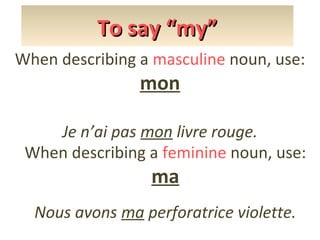
To say “my”
When describing a masculine noun, use:

mon

Je n’ai pas mon livre rouge.
When describing a feminine noun, use:

ma

Nous avons ma perforatrice violette.
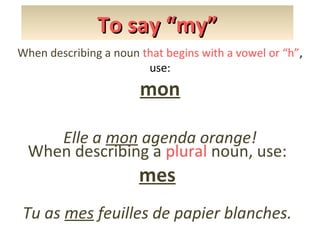
To say “my”
When describing a noun that begins with a vowel or “h”,
use:

mon
Elle a mon agenda orange!
When describing a plural noun, use:

mes

Tu as mes feuilles de papier blanches.
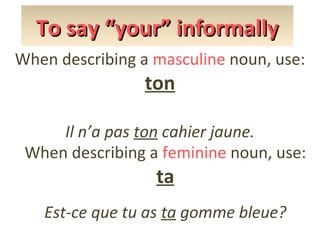
To say “your” informally
When describing a masculine noun, use:

ton

Il n’a pas ton cahier jaune.
When describing a feminine noun, use:

ta

Est-ce que tu as ta gomme bleue?
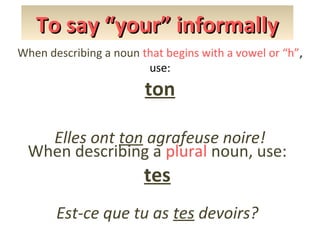
To say “your” informally
When describing a noun that begins with a vowel or “h”,
use:

ton
Elles ont ton agrafeuse noire!
When describing a plural noun, use:

tes

Est-ce que tu as tes devoirs?
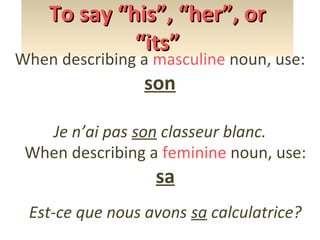
To say “his”, “her”, or
“its”

When describing a masculine noun, use:

son

Je n’ai pas son classeur blanc.
When describing a feminine noun, use:

sa

Est-ce que nous avons sa calculatrice?
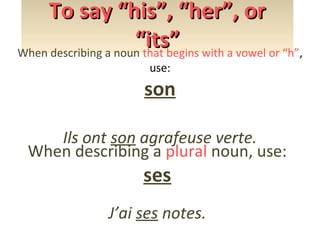
To say “his”, “her”, or
“its” with a vowel or “h”,
When describing a noun that begins
use:

son
Ils ont son agrafeuse verte.
When describing a plural noun, use:

ses

J’ai ses notes.
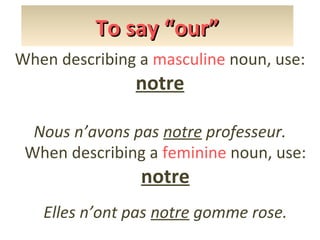
To say “our”
When describing a masculine noun, use:

notre

Nous n’avons pas notre professeur.
When describing a feminine noun, use:

notre

Elles n’ont pas notre gomme rose.
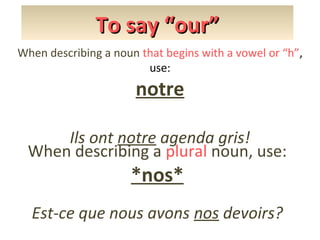
To say “our”
When describing a noun that begins with a vowel or “h”,
use:

notre
Ils ont notre agenda gris!
When describing a plural noun, use:

*nos*

Est-ce que nous avons nos devoirs?
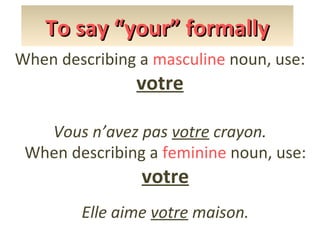
To say “your” formally
When describing a masculine noun, use:

votre

Vous n’avez pas votre crayon.
When describing a feminine noun, use:

votre

Elle aime votre maison.
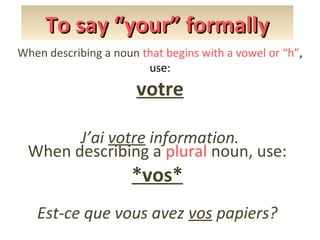
To say “your” formally
When describing a noun that begins with a vowel or “h”,
use:

votre
J’ai votre information.
When describing a plural noun, use:

*vos*

Est-ce que vous avez vos papiers?
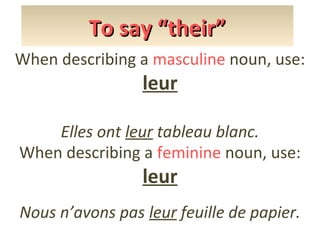
To say “their”
When describing a masculine noun, use:

leur

Elles ont leur tableau blanc.
When describing a feminine noun, use:

leur

Nous n’avons pas leur feuille de papier.
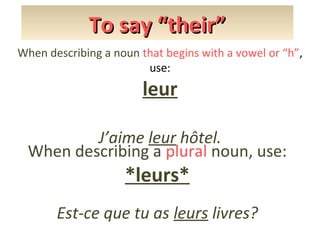
To say “their”
When describing a noun that begins with a vowel or “h”,
use:

leur
J’aime leur hôtel.
When describing a plural noun, use:

*leurs*

Est-ce que tu as leurs livres?
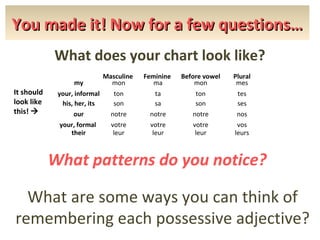
You made it! Now for a few questions…
What does your chart look like?
my

It should
look like
this! 

Masculine
mon

Feminine
ma

Before vowel
mon

Plural
mes

your, informal
his, her, its
our
your, formal
their

ton
son
notre
votre
leur

ta
sa
notre
votre
leur

ton
son
notre
votre
leur

tes
ses
nos
vos
leurs

What patterns do you notice?
What are some ways you can think of
remembering each possessive adjective?

Possessive Adjectives

  • 1.
    les adjectifs possessifs InEnglish, we use this type of word everyday when referring to certain items that belong to someone.
  • 2.
    les adjectifs possessifs Whatare examples of possessive adjectives in English? My Our Your His Their Her Its
  • 3.
    les adjectifs possessifs InFrench, there are different words that mean “my”, “your”, “his”, (etc.) based on the gender of the noun you are talking about, and whether it is a singular or plural noun.
  • 4.
    les adjectifs possessifs Justlike articles, there are a few different versions of possessive adjectives. For example, you use different variations to say “my” when describing a masculine noun, a feminine noun, a noun that begins with a vowel, and a plural noun.
  • 5.
    To say “my” Whendescribing a masculine noun, use: mon Je n’ai pas mon livre rouge. When describing a feminine noun, use: ma Nous avons ma perforatrice violette.
  • 6.
    To say “my” Whendescribing a noun that begins with a vowel or “h”, use: mon Elle a mon agenda orange! When describing a plural noun, use: mes Tu as mes feuilles de papier blanches.
  • 7.
    To say “your”informally When describing a masculine noun, use: ton Il n’a pas ton cahier jaune. When describing a feminine noun, use: ta Est-ce que tu as ta gomme bleue?
  • 8.
    To say “your”informally When describing a noun that begins with a vowel or “h”, use: ton Elles ont ton agrafeuse noire! When describing a plural noun, use: tes Est-ce que tu as tes devoirs?
  • 9.
    To say “his”,“her”, or “its” When describing a masculine noun, use: son Je n’ai pas son classeur blanc. When describing a feminine noun, use: sa Est-ce que nous avons sa calculatrice?
  • 10.
    To say “his”,“her”, or “its” with a vowel or “h”, When describing a noun that begins use: son Ils ont son agrafeuse verte. When describing a plural noun, use: ses J’ai ses notes.
  • 11.
    To say “our” Whendescribing a masculine noun, use: notre Nous n’avons pas notre professeur. When describing a feminine noun, use: notre Elles n’ont pas notre gomme rose.
  • 12.
    To say “our” Whendescribing a noun that begins with a vowel or “h”, use: notre Ils ont notre agenda gris! When describing a plural noun, use: *nos* Est-ce que nous avons nos devoirs?
  • 13.
    To say “your”formally When describing a masculine noun, use: votre Vous n’avez pas votre crayon. When describing a feminine noun, use: votre Elle aime votre maison.
  • 14.
    To say “your”formally When describing a noun that begins with a vowel or “h”, use: votre J’ai votre information. When describing a plural noun, use: *vos* Est-ce que vous avez vos papiers?
  • 15.
    To say “their” Whendescribing a masculine noun, use: leur Elles ont leur tableau blanc. When describing a feminine noun, use: leur Nous n’avons pas leur feuille de papier.
  • 16.
    To say “their” Whendescribing a noun that begins with a vowel or “h”, use: leur J’aime leur hôtel. When describing a plural noun, use: *leurs* Est-ce que tu as leurs livres?
  • 17.
    You made it!Now for a few questions… What does your chart look like? my It should look like this!  Masculine mon Feminine ma Before vowel mon Plural mes your, informal his, her, its our your, formal their ton son notre votre leur ta sa notre votre leur ton son notre votre leur tes ses nos vos leurs What patterns do you notice? What are some ways you can think of remembering each possessive adjective?