The Present Perfect


Emploi / Use:
                            C'est un moment précis sans rapport avec le présent.
                                   It is a precise moment with no link to the present

Un moment précis : Hier, je suis allé à la plage. (Yesterday I went to the beach.)
Une répétition : Je suis allé 4 fois au cinéma. (I went to the cinema four times)
Une succession : Je suis allé à la plage, j'ai rencontré Stéphane, on est retourné dans un café, ...

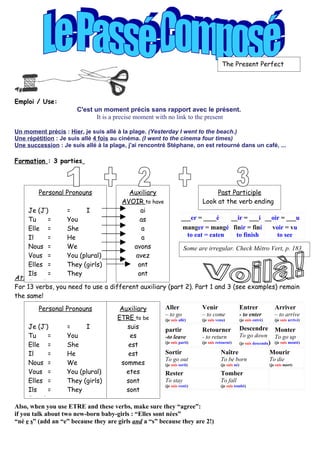
Formation : 3 parties


           Personal Pronouns                       Auxiliary                               Past Participle
                                                 AVOIR to have                        Look at the verb ending
    Je (J’)       =     I                              ai
    Tu     =      You                                 as___er = ____é     __ir = ___i __oir = ___u
    Elle =        She                                  a manger = mangé finir = fini     voir = vu
    Il     =      He                                   a   to eat = eaten    to finish     to see
    Nous =        We                                avonsSome are irregular. Check Métro Vert, p. 183
    Vous =        You (plural)                       avez
    Elles =       They (girls)                        ont
    Ils    =      They                                ont
Attention ! - Exception
    (boys)
For 13 verbs, you need to use a different auxiliary (part 2). Part 1 and 3 (see examples) remain
the same!
           Personal Pronouns                    Auxiliary            Aller            Venir            Entrer            Arriver
                                                                     – to go          – to come        - to enter        – to arrive
                                               ETRE to be            (je suis allé)   (je suis venu)   (je suis entré)   (je suis arrivé)
     Je (J’)        =     I                       suis  partir          Retourner Descendre Monter
     Tu      =      You                            es   -to leave       - to return              To go down To go up
                                                                                                 (je suis descendu) (je suis monté)
     Elle =         She                            est  (je suis parti) (je suis retourné)

     Il      =      He                             est  Sortir                      Naître                         Mourir
                                                        To go out                   To be born                     To die
     Nous =         We                          sommes  (je suis sorti)             (je suis né)                   (je suis mort)
     Vous =         You (plural)                  etes  Rester                      Tomber
     Elles =        They (girls)                  sont  To stay                     To fall
                                                        (je suis resté)             (je suis tombé)
     Ils     =      They                          sont
     (boys)
Also, when you use ETRE and these verbs, make sure they “agree”:
if you talk about two new-born baby-girls : “Elles sont nées”
“né e s” (add an “e” because they are girls and a “s” because they are 2!)

Passe Compose

  • 1.
    The Present Perfect Emploi/ Use: C'est un moment précis sans rapport avec le présent. It is a precise moment with no link to the present Un moment précis : Hier, je suis allé à la plage. (Yesterday I went to the beach.) Une répétition : Je suis allé 4 fois au cinéma. (I went to the cinema four times) Une succession : Je suis allé à la plage, j'ai rencontré Stéphane, on est retourné dans un café, ... Formation : 3 parties Personal Pronouns Auxiliary Past Participle AVOIR to have Look at the verb ending Je (J’) = I ai Tu = You as___er = ____é __ir = ___i __oir = ___u Elle = She a manger = mangé finir = fini voir = vu Il = He a to eat = eaten to finish to see Nous = We avonsSome are irregular. Check Métro Vert, p. 183 Vous = You (plural) avez Elles = They (girls) ont Ils = They ont Attention ! - Exception (boys) For 13 verbs, you need to use a different auxiliary (part 2). Part 1 and 3 (see examples) remain the same! Personal Pronouns Auxiliary Aller Venir Entrer Arriver – to go – to come - to enter – to arrive ETRE to be (je suis allé) (je suis venu) (je suis entré) (je suis arrivé) Je (J’) = I suis partir Retourner Descendre Monter Tu = You es -to leave - to return To go down To go up (je suis descendu) (je suis monté) Elle = She est (je suis parti) (je suis retourné) Il = He est Sortir Naître Mourir To go out To be born To die Nous = We sommes (je suis sorti) (je suis né) (je suis mort) Vous = You (plural) etes Rester Tomber Elles = They (girls) sont To stay To fall (je suis resté) (je suis tombé) Ils = They sont (boys) Also, when you use ETRE and these verbs, make sure they “agree”: if you talk about two new-born baby-girls : “Elles sont nées” “né e s” (add an “e” because they are girls and a “s” because they are 2!)