Les accueils et les choses qui peuvent arriver en classeLeçon 2
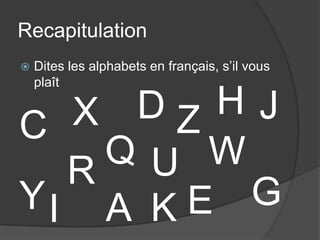
RecapitulationDites les alphabets en français, s’il vous plaîtHDJXZCQWURGYEAKI
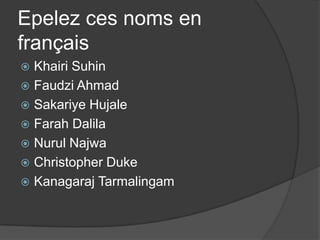
Epelez ces noms en françaisKhairiSuhinFaudzi AhmadSakariyeHujaleFarah DalilaNurulNajwaChristopher DukeKanagarajTarmalingam
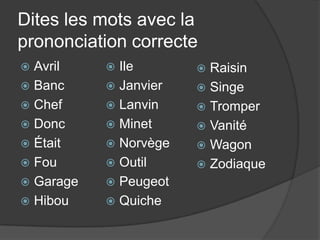
Dites les mots avec la prononciation correcteAvrilBancChefDoncÉtaitFouGarageHibouIleJanvierLanvinMinetNorvègeOutilPeugeotQuicheRaisinSingeTromperVanitéWagonZodiaque
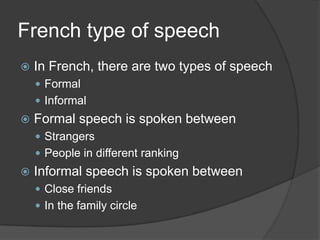
French type of speechIn French, there are two types of speechFormalInformalFormal speech isspokenbetweenStrangersPeople in differentrankingInformal speech isspokenbetweenClose friendsIn the familycircle
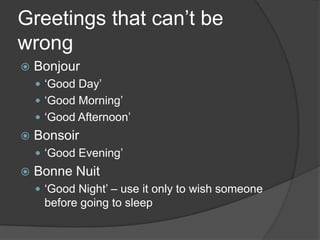
Greetingsthatcan’tbewrongBonjour‘Good Day’‘Good Morning’‘Good Afternoon’Bonsoir‘Good Evening’Bonne Nuit‘Good Night’ – use itonly to wishsomeonebeforegoing to sleep
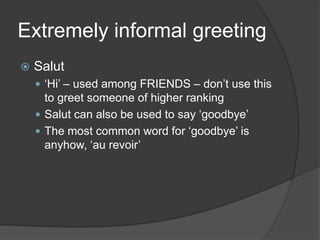
ExtremelyinformalgreetingSalut‘Hi’ – usedamong FRIENDS – don’t use this to greetsomeone of higherrankingSalut canalsobeused to say ‘goodbye’The mostcommonword for ‘goodbye’ isanyhow, ‘au revoir’
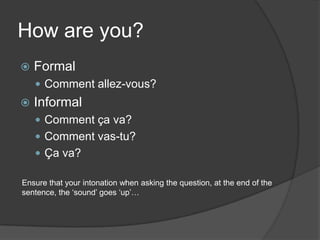
How are you?FormalComment allez-vous?InformalComment ça va?Comment vas-tu?Ça va?Ensurethatyour intonation whenasking the question, at the end of thesentence, the ‘sound’ goes ‘up’…
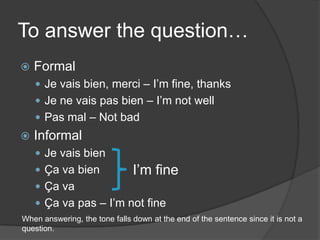
To answer the question…FormalJe vais bien, merci – I’m fine, thanksJe ne vais pas bien – I’m not wellPas mal – Not badInformalJe vais bienÇa va bienÇa vaÇa va pas – I’m not fineI’m fineWhenanswering, the tonefalls down at the end of the sentence sinceitis not a question.
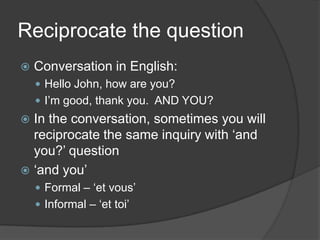
Reciprocate the questionConversation in English:Hello John, how are you?I’m good, thankyou.  AND YOU?In the conversation, sometimesyouwillreciprocate the sameinquirywith ‘and you?’ question‘and you’Formal – ‘et vous’Informal – ‘et toi’
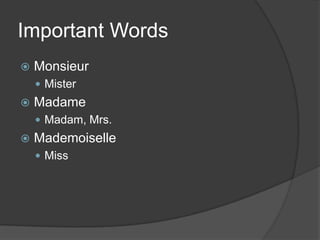
Important WordsMonsieurMisterMadameMadam, Mrs.MademoiselleMiss
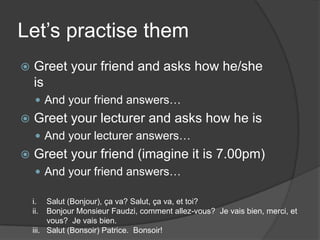
Let’spractisethemGreet yourfriend and asks how he/sheisAnd yourfriendanswers…Greet yourlecturer and asks how heisAnd yourlectureranswers…Greet yourfriend (imagine itis 7.00pm)And yourfriendanswers…Salut (Bonjour), ça va? Salut, ça va, et toi?Bonjour Monsieur Faudzi, comment allez-vous?  Je vais bien, merci, et vous?  Je vais bien.Salut (Bonsoir) Patrice.  Bonsoir!
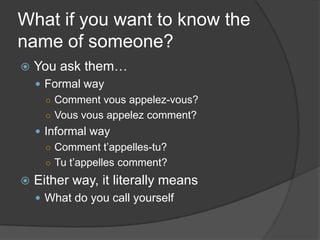
What if you want to know the name of someone?You ask them…Formal wayComment vousappelez-vous?Vousvousappelez comment?Informal wayComment t’appelles-tu?Tut’appelles comment?Either way, it literally meansWhat do you call yourself
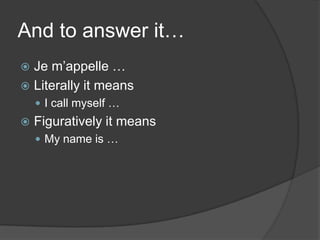
And to answer it…Je m’appelle … Literally it meansI call myself …Figuratively it meansMy name is …
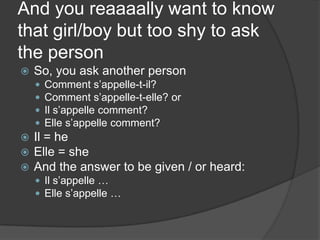
And you reaaaally want to know that girl/boy but too shy to ask the personSo, you ask another personComment s’appelle-t-il?Comment s’appelle-t-elle? orIl s’appelle comment?Elle s’appelle comment?Il = heElle = sheAnd the answer to be given / or heard:Il s’appelle …Elle s’appelle …
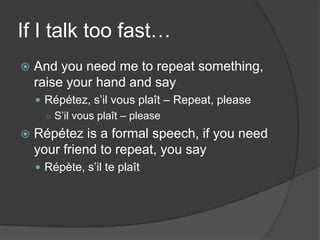
If I talk toofast…And youneed me to repeatsomething, raiseyour hand and sayRépétez, s’il vous plaît – Repeat, pleaseS’il vous plaît – pleaseRépétez is a formal speech, if youneedyourfriend to repeat, yousayRépète, s’il te plaît
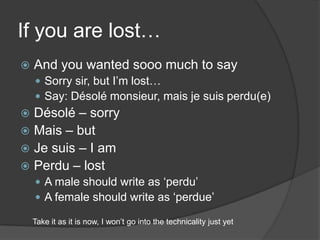
If you are lost…And youwantedsooomuch to saySorry sir, but I’mlost…Say: Désolé monsieur, mais je suis perdu(e)Désolé – sorryMais – butJe suis – I amPerdu – lostA male shouldwrite as ‘perdu’A femaleshouldwrite as ‘perdue’Takeit as itisnow, I won’t go into the technicalityjustyet
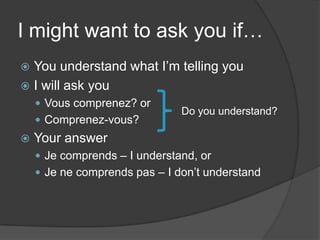
I mightwant to askyou if…You understandwhatI’mtellingyouI willaskyouVous comprenez? orComprenez-vous?YouranswerJe comprends – I understand, orJe ne comprends pas – I don’tunderstandDo youunderstand?
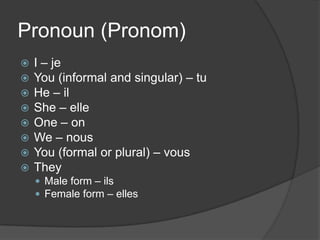
Pronoun (Pronom)I – jeYou (informaland singular) – tuHe – ilShe – elleOne – onWe – nousYou (formal or plural) – vousTheyMale form – ilsFemaleform – elles
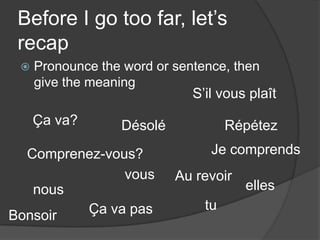
Before I go too far, let’srecapPronounce the word or sentence, thengive the meaningS’il vous plaîtÇa va?DésoléRépétezJe comprendsComprenez-vous?vousAu revoirellesnoustuÇa va pasBonsoir
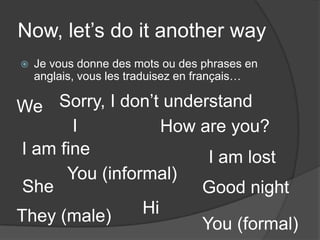
Now, let’s do itanotherwayJe vous donne des mots ou des phrases en anglais, vous les traduisez en français…Sorry, I don’tunderstandWeIHow are you?I am fineI amlostYou (informal)SheGood nightHiThey (male)You (formal)
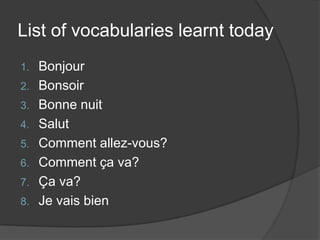
List of vocabularies learnt todayBonjourBonsoirBonne nuitSalutComment allez-vous?Comment ça va?Ça va?Je vais bien
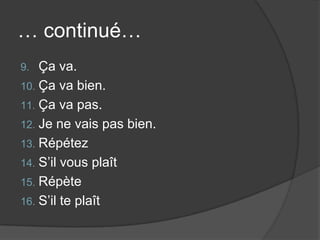
… continué…Ça va.Ça va bien.Ça va pas.Je ne vais pas bien.RépétezS’il vous plaîtRépèteS’il te plaît
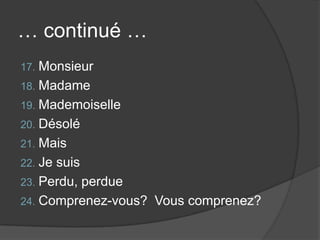
… continué …MonsieurMadameMademoiselleDésoléMaisJe suisPerdu, perdueComprenez-vous?  Vous comprenez?
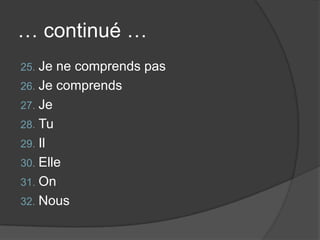
… continué …Je ne comprends pasJe comprendsJeTuIlElleOnNous
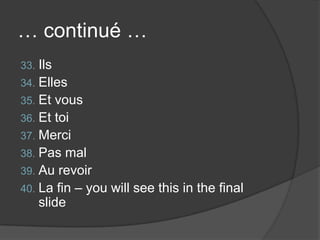
… continué …IlsEllesEt vousEt toiMerci Pas malAu revoirLa fin – youwillseethis in the final slide
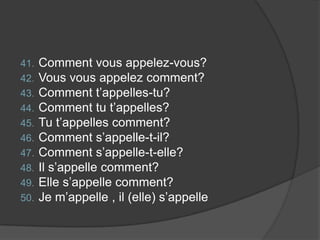
Comment vous appelez-vous?Vous vous appelez comment?Comment t’appelles-tu?Comment tu t’appelles?Tu t’appelles comment?Comment s’appelle-t-il?Comment s’appelle-t-elle?Il s’appelle comment?Elle s’appelle comment?Je m’appelle , il (elle) s’appelle
La FinPratiquez tous les jours, n’oubliez pas ce que vous avez appris.  Les Champs Elysées, Paris

Lecon02

  • 1.
    Les accueils etles choses qui peuvent arriver en classeLeçon 2
  • 2.
    RecapitulationDites les alphabetsen français, s’il vous plaîtHDJXZCQWURGYEAKI
  • 3.
    Epelez ces nomsen françaisKhairiSuhinFaudzi AhmadSakariyeHujaleFarah DalilaNurulNajwaChristopher DukeKanagarajTarmalingam
  • 4.
    Dites les motsavec la prononciation correcteAvrilBancChefDoncÉtaitFouGarageHibouIleJanvierLanvinMinetNorvègeOutilPeugeotQuicheRaisinSingeTromperVanitéWagonZodiaque
  • 5.
    French type ofspeechIn French, there are two types of speechFormalInformalFormal speech isspokenbetweenStrangersPeople in differentrankingInformal speech isspokenbetweenClose friendsIn the familycircle
  • 6.
    Greetingsthatcan’tbewrongBonjour‘Good Day’‘Good Morning’‘GoodAfternoon’Bonsoir‘Good Evening’Bonne Nuit‘Good Night’ – use itonly to wishsomeonebeforegoing to sleep
  • 7.
    ExtremelyinformalgreetingSalut‘Hi’ – usedamongFRIENDS – don’t use this to greetsomeone of higherrankingSalut canalsobeused to say ‘goodbye’The mostcommonword for ‘goodbye’ isanyhow, ‘au revoir’
  • 8.
    How are you?FormalCommentallez-vous?InformalComment ça va?Comment vas-tu?Ça va?Ensurethatyour intonation whenasking the question, at the end of thesentence, the ‘sound’ goes ‘up’…
  • 9.
    To answer thequestion…FormalJe vais bien, merci – I’m fine, thanksJe ne vais pas bien – I’m not wellPas mal – Not badInformalJe vais bienÇa va bienÇa vaÇa va pas – I’m not fineI’m fineWhenanswering, the tonefalls down at the end of the sentence sinceitis not a question.
  • 10.
    Reciprocate the questionConversationin English:Hello John, how are you?I’m good, thankyou. AND YOU?In the conversation, sometimesyouwillreciprocate the sameinquirywith ‘and you?’ question‘and you’Formal – ‘et vous’Informal – ‘et toi’
  • 11.
  • 12.
    Let’spractisethemGreet yourfriend andasks how he/sheisAnd yourfriendanswers…Greet yourlecturer and asks how heisAnd yourlectureranswers…Greet yourfriend (imagine itis 7.00pm)And yourfriendanswers…Salut (Bonjour), ça va? Salut, ça va, et toi?Bonjour Monsieur Faudzi, comment allez-vous? Je vais bien, merci, et vous? Je vais bien.Salut (Bonsoir) Patrice. Bonsoir!
  • 13.
    What if youwant to know the name of someone?You ask them…Formal wayComment vousappelez-vous?Vousvousappelez comment?Informal wayComment t’appelles-tu?Tut’appelles comment?Either way, it literally meansWhat do you call yourself
  • 14.
    And to answerit…Je m’appelle … Literally it meansI call myself …Figuratively it meansMy name is …
  • 15.
    And you reaaaallywant to know that girl/boy but too shy to ask the personSo, you ask another personComment s’appelle-t-il?Comment s’appelle-t-elle? orIl s’appelle comment?Elle s’appelle comment?Il = heElle = sheAnd the answer to be given / or heard:Il s’appelle …Elle s’appelle …
  • 16.
    If I talktoofast…And youneed me to repeatsomething, raiseyour hand and sayRépétez, s’il vous plaît – Repeat, pleaseS’il vous plaît – pleaseRépétez is a formal speech, if youneedyourfriend to repeat, yousayRépète, s’il te plaît
  • 17.
    If you arelost…And youwantedsooomuch to saySorry sir, but I’mlost…Say: Désolé monsieur, mais je suis perdu(e)Désolé – sorryMais – butJe suis – I amPerdu – lostA male shouldwrite as ‘perdu’A femaleshouldwrite as ‘perdue’Takeit as itisnow, I won’t go into the technicalityjustyet
  • 18.
    I mightwant toaskyou if…You understandwhatI’mtellingyouI willaskyouVous comprenez? orComprenez-vous?YouranswerJe comprends – I understand, orJe ne comprends pas – I don’tunderstandDo youunderstand?
  • 19.
    Pronoun (Pronom)I –jeYou (informaland singular) – tuHe – ilShe – elleOne – onWe – nousYou (formal or plural) – vousTheyMale form – ilsFemaleform – elles
  • 20.
    Before I gotoo far, let’srecapPronounce the word or sentence, thengive the meaningS’il vous plaîtÇa va?DésoléRépétezJe comprendsComprenez-vous?vousAu revoirellesnoustuÇa va pasBonsoir
  • 21.
    Now, let’s doitanotherwayJe vous donne des mots ou des phrases en anglais, vous les traduisez en français…Sorry, I don’tunderstandWeIHow are you?I am fineI amlostYou (informal)SheGood nightHiThey (male)You (formal)
  • 22.
    List of vocabularieslearnt todayBonjourBonsoirBonne nuitSalutComment allez-vous?Comment ça va?Ça va?Je vais bien
  • 23.
    … continué…Ça va.Çava bien.Ça va pas.Je ne vais pas bien.RépétezS’il vous plaîtRépèteS’il te plaît
  • 24.
    … continué …MonsieurMadameMademoiselleDésoléMaisJesuisPerdu, perdueComprenez-vous? Vous comprenez?
  • 25.
    … continué …Jene comprends pasJe comprendsJeTuIlElleOnNous
  • 26.
    … continué …IlsEllesEtvousEt toiMerci Pas malAu revoirLa fin – youwillseethis in the final slide
  • 27.
    Comment vous appelez-vous?Vousvous appelez comment?Comment t’appelles-tu?Comment tu t’appelles?Tu t’appelles comment?Comment s’appelle-t-il?Comment s’appelle-t-elle?Il s’appelle comment?Elle s’appelle comment?Je m’appelle , il (elle) s’appelle
  • 28.
    La FinPratiquez tousles jours, n’oubliez pas ce que vous avez appris. Les Champs Elysées, Paris