






Ne Râtez pas 
le mariage 
du (21ème) siècle
2 
Laurent SARRAZIN
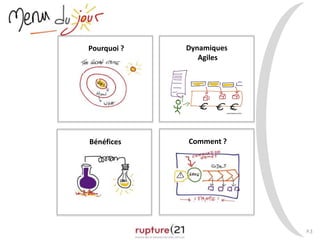
Pourquoi ? Dynamiques 
Agiles 
Bénéfices 
P.3 
Comment ?
P.4 
La petite poucette : 
histoire de la complexité du 21ème siècle
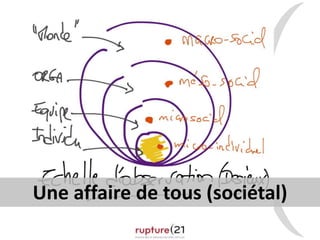
Une affaire de tous (sociétal)
P.6 
© Sergey Nivens - Fotolia.com 
Fin de Cycle 
pour les systèmes prédictifs
7 
Complexité & Agilité 
= LE mariage du 21ème siècle
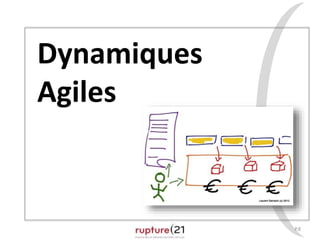
Dynamiques 
Agiles 
P.8
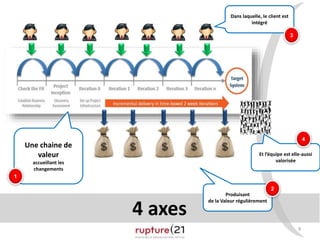
Et l’équipe est elle-aussi 
9 
4 axes 
Dans laquelle, le client est 
intégré 
Produisant 
de la Valeur régulièrement 
valorisée 
Une chaine de 
valeur 
accueillant les 
changements 
1 
2 
3 
4
10 
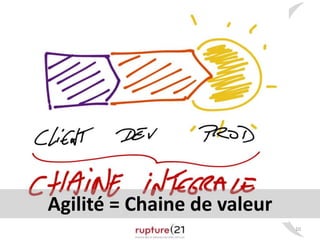
Agilité = Chaine de valeur
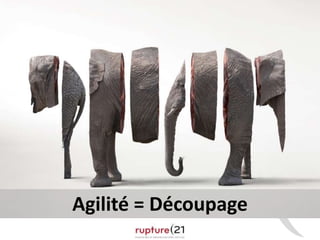
Agilité = Découpage
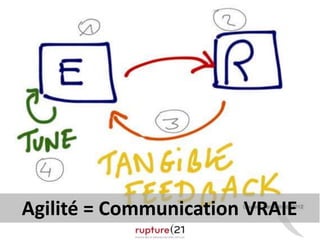
Agilité = Communication VRAIE
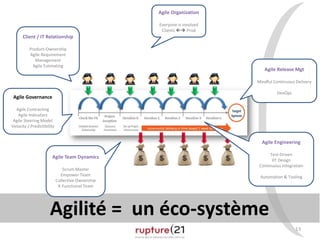
Agilité = un éco-système 
13 
Client / IT Relationship 
Product-Ownership 
Agile Requirement 
Management 
Agile Estimating 
Agile Governance 
Agile Contracting 
Agile Indicators 
Agile Steering Model 
Velocity / Predictibility 
Agile Engineering 
Test-Driven 
JIT Design 
Continuous Integration 
Automation & Tooling 
Agile Team Dynamics 
Scrum Master 
Empower Team 
Collective Ownership 
X-Functional Team 
Agile Release Mgt 
Mindful Continuous Delivery 
DevOps 
Agile Organization 
Everyone is involved 
Clients  Prod
P.14 
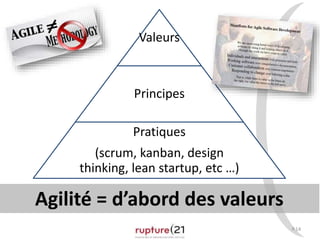
Valeurs 
Principes 
Pratiques 
(scrum, kanban, design 
thinking, lean startup, etc …) 
Agilité = d’abord des valeurs
15 
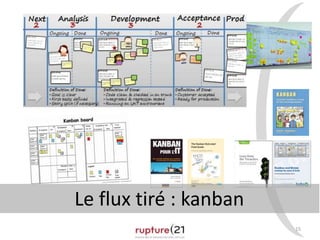
Le flux tiré : kanban
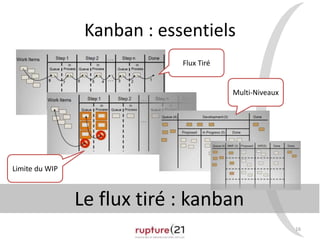
Kanban : essentiels 
16 
Flux Tiré 
Limite du WIP 
Multi-Niveaux 
Le flux tiré : kanban
P.17 
Bénéfices de l’agilité
18 
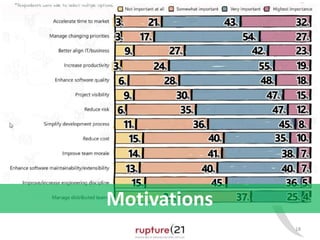
Motivations
19 
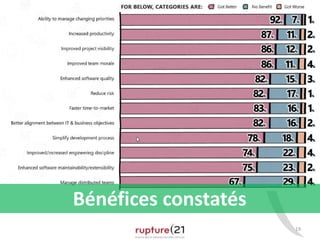
Bénéfices constatés
P.20 
Non !!!
P.21 
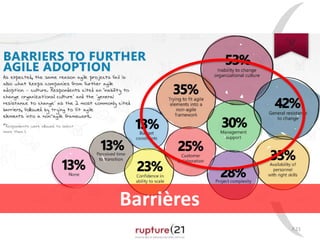
Barrières
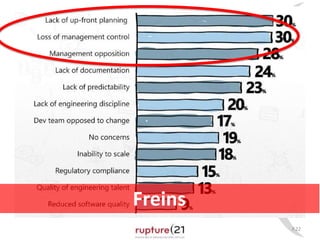
P.22 
Freins
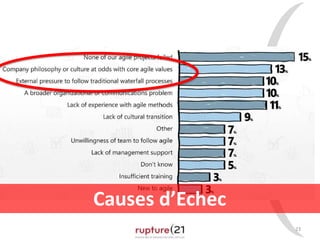
23 
Causes d’Echec
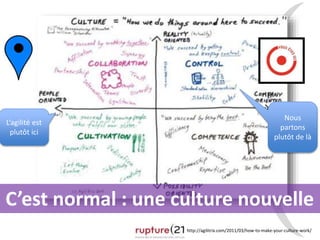
Nous 
partons 
plutôt de là 
http://agilitrix.com/2011/03/how-to-make-your-culture-work/ 
L’agilité est 
plutôt ici 
C’est normal : une culture nouvelle
25 
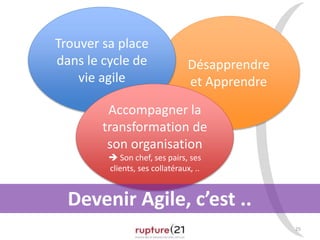
Désapprendre 
et Apprendre 
Trouver sa place 
dans le cycle de 
vie agile 
Accompagner la 
transformation de 
son organisation 
 Son chef, ses pairs, ses 
clients, ses collatéraux, .. 
Devenir Agile, c’est ..
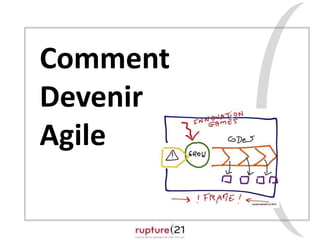
Comment 
Devenir 
Agile
27 
Quel chemin ?
28 
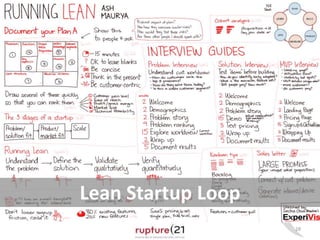
Lean Startup Loop
P.29 
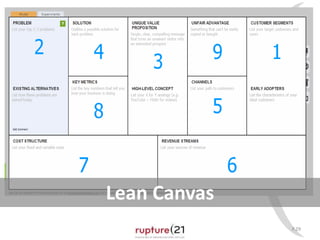
Lean Canvas
P.30 
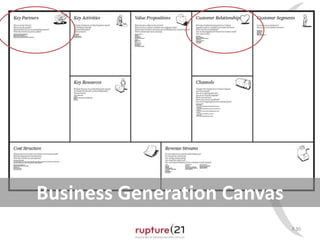
Business Generation Canvas
P.31 
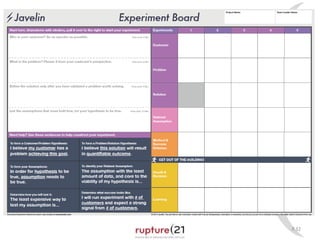
« Je ne sais pas … »
P.32
P.33 
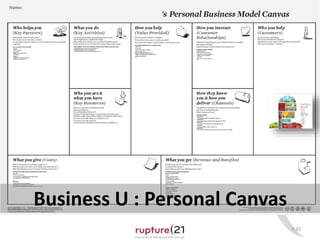
Business U : Personal Canvas
P.34 
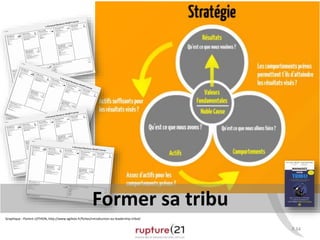
Former sa tribu 
Graphique : Florent LOTHON, http://www.agiliste.fr/fiches/introduction-au-leadership-tribal/
P.35
36 
Construire sur vos forces
Beyond Tools and Processes 
 Co-Elaborate, with Playfull 
Facilitation 
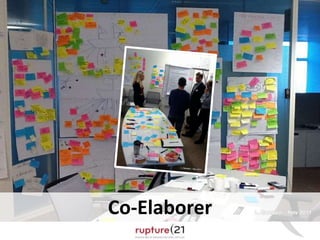
Co-Elaborer
Adopter Coaching & Facilitation 
P.38
P.39 
Goûter au Coaching Bref
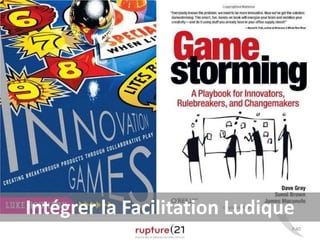
Intégrer la Facilitation Ludique 
P.40
41 
Innovation Games ®
42 
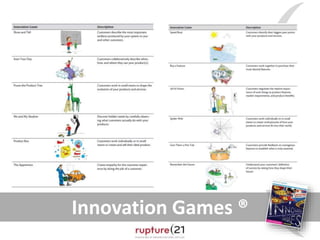
Innovation Games ®
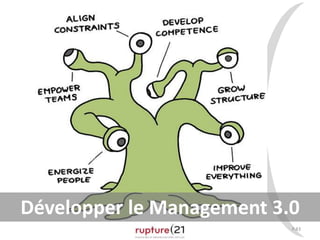
Développer le Management 3.0 
P.43
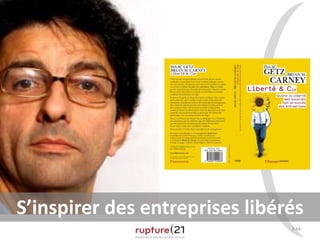
S’inspirer des entreprises libérés 
P.44
45 
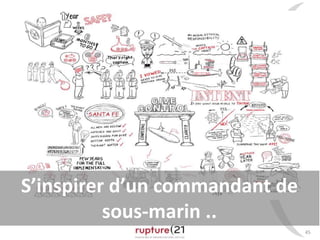
S’inspirer d’un commandant de 
sous-marin ..
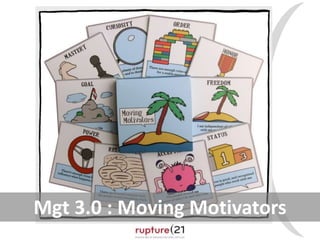
Mgt 3.0 : Moving Motivators
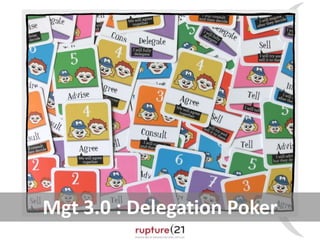
Mgt 3.0 : Delegation Poker
P.48 
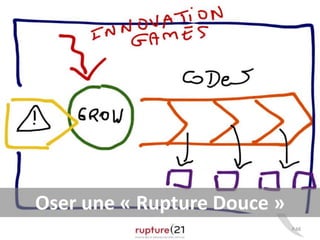
Oser une « Rupture Douce »
P.49 
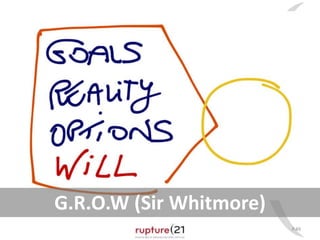
G.R.O.W (Sir Whitmore)
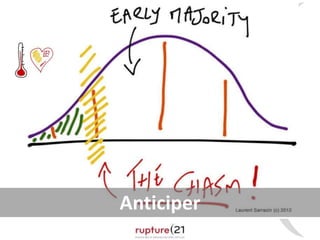
Anticiper
P.51 
Polliniser avec les Safaris
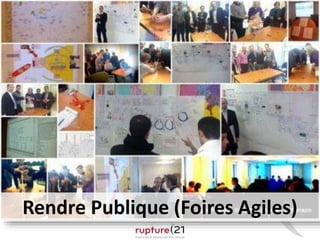
Rendre Publique (Foires Agiles)
Et vous ?
P.54
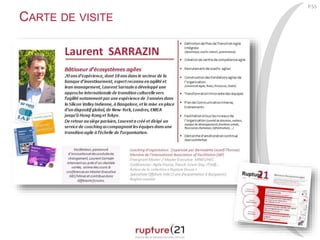
CARTE DE VISITE 
P.55

Rupture Douce @ Booster d'Innovations Sociales Région IdF

Notes de l'éditeur

  • #6 La business Agility concerne toute les strates
  • #7 Nous reconnaissons qu’une équipe agile, une organisation agiles sont des systèmes complexes adaptatifs ! La pensée linéaire, le management « command-control », la planification rigide, etc ne sont plus adaptés pour ces systèmes. Ils doivent laisser place à une dynamique nouvelle intégrant L’accueil des changements Tous les cerveaux  auto-organisation Une communication ‘osmotique’ Des cycles courts de rétroaction
  • #28 I’ve used 2 ways to guide companies. Unlocking Problems, or Be Solutions-Driven.
  • #29 The first stragegy is traditionnal one. We are naturally problem-oriented, and some company will more forward only with this approach. You can understand it is not my favorite one, and to make it a bit fun, i use the LeanStartup spirit, especially the LeanCanvas. I’ve be inspired by Ash MAURYA and his famous book « Running Lean ». To drive a transition to CD with the LeanCanvas Start by finding what 3 real problems CD will solve, and who is having these problems. Check how people do with these problems. Validate that those problem are reals with the stakeholders. Define your Unique Value Proposal (‘hey ! This is CD !!! ») Identify 3 solutions that will remove those 3 problems : your 3 first steps. Remember the Heat Map. You are not going for a big bang ! Define your metrics : how will observer that those problems are solved, and what know people are doing differently. Implement your solutions Check your metrics What did you learn Start again.
  • #37 I’ve definitively switched to Strength-Based Mindset. So, i won’t lose your time taking about problems. Instead, i’ll focus on « What works well » and guide people with attractive horizons.
  • #38 A first step to change the culture, and go beyond the silos is to promote CO-ELABORATION.
  • #39 Again, easy to say … but not natural. This is where my job takes place, and this is where your company should open up and adopt a coach and/or a facilitator. There is no shame about that.
  • #40 Why? usually, companies are used to get on-the-shelf solutions from consultant. That’s fine, but the level of adoption is low, and the level of transformation lower. People are asking how to do something, like implement some part of CD, and they will the consultant for the answer. In our world, we call that « Getting a fish ». Coaching is an invitation for people to get a fishing rod, and guide them to catch fishes (the solutions) by themselves. Only when they are short of answer, because they do not know, so they are just at the door of an innovation, then a mentor can feed them and let see integrate. Coaching should be a short-term process, thank’s to « Brief Coaching » or « Solution Focus Coaching ». Coaching is a really powerfull way to install long-term outcomes.
  • #41 Another way i use also is facilitation. In coaching, we help people with Questionning. In Facilitation, we help people with playful workshop. The frame is a bit more structured, but we let the attendees accountable of the content / the solutions that will emerge. Here are 2 key resources, and i’ll give you 2 examples.
  • #43 Etoiles : les jeux abordés au cours de cette session
  • #49 Continuous Disruption Iterate Visible Impacts / Outcomes