Serfaty Du 2009
Serfaty Du 2009
Serfaty Du 2009
Serfaty Du 2009
Serfaty Du 2009
Serfaty Du 2009
Serfaty Du 2009
Serfaty Du 2009
Serfaty Du 2009
Serfaty Du 2009
Serfaty Du 2009
Serfaty Du 2009
Serfaty Du 2009
Serfaty Du 2009
Serfaty Du 2009
Serfaty Du 2009
Serfaty Du 2009
Serfaty Du 2009
Serfaty Du 2009
Serfaty Du 2009
Serfaty Du 2009
Serfaty Du 2009
Serfaty Du 2009
Serfaty Du 2009
Serfaty Du 2009
Serfaty Du 2009
Serfaty Du 2009
Serfaty Du 2009
Serfaty Du 2009
Serfaty Du 2009
Serfaty Du 2009
Serfaty Du 2009
Serfaty Du 2009
Serfaty Du 2009
Serfaty Du 2009
Serfaty Du 2009
Serfaty Du 2009
Serfaty Du 2009
Serfaty Du 2009
Serfaty Du 2009

Notes de l'éditeur

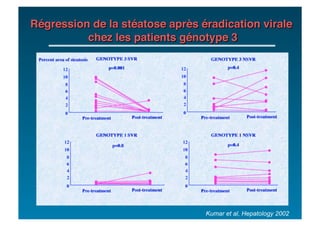
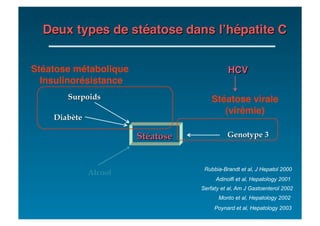
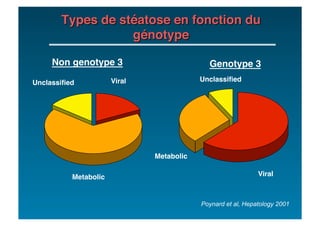
  • #14 In a recent study, Kumar et al have studied the impact of antiviral therapy on steatosis according to genotypes and response to treatment. As you can see on these figures, patients infected with genotype 3, it means viral steatosis, had significant improvement of steatosis in case of virological response, wherea patients infected with genotype 1, it means metabolic steatosis, had no such improvement whatever the response.
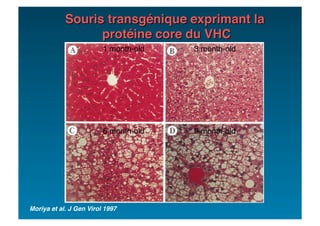
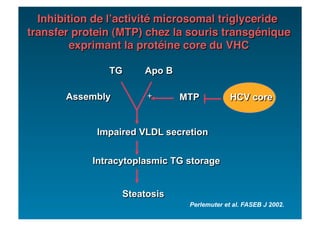
  • #16 In favour of the interaction between HCV and apo B, Perlemuter et al have shown in transgenic mice expressing HCV core protein that microsomal triglyceride transfer protein was inhibited, leading to impaired VLDL secretion and steatosis.
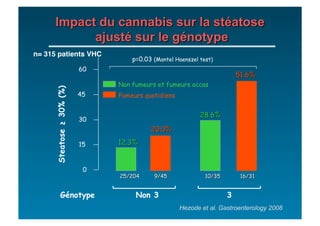
  • #19 Since a strong link was found between HCV genotype 3 and cannabis smoking, the relationship between steatosis and cannabis intake was studied following adjustment on genotype. In patients with genotype 3 like in those with genotype non-3, the proportion of patients with severe steatosis was significantly greater in daily cannabis smokers than in non smokers and occasional smokers.
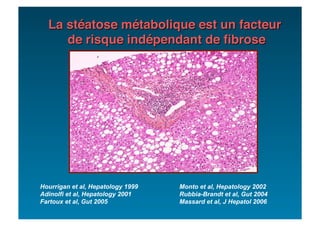
  • #41 A number of cross sectional studies have shown that steatosis was associated with more severe fibrosis in chronic hepatitis C, independently from other risk factors.